



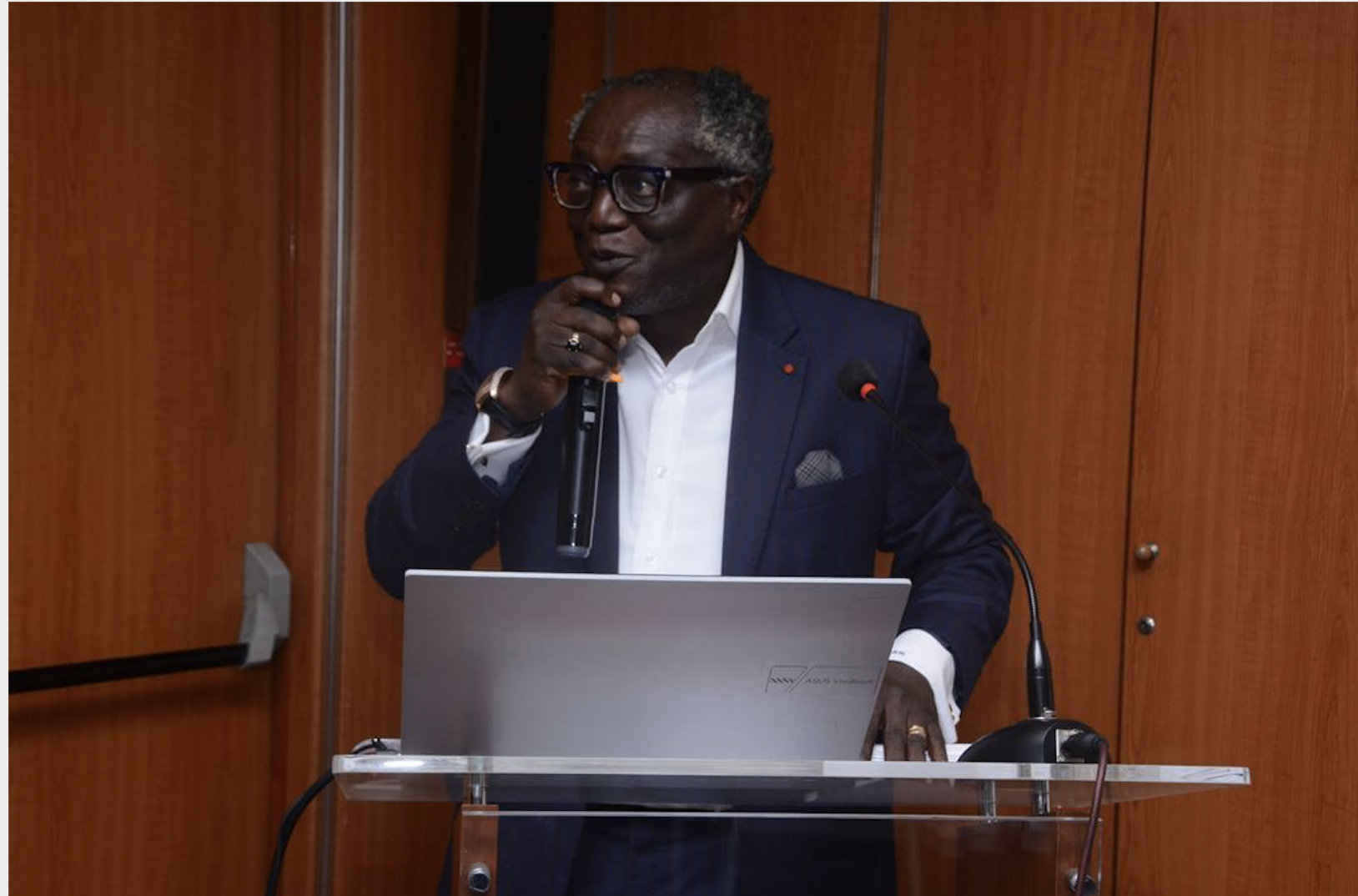
By Serge Kouamelan, Executive Director of the Professional Association of Banks and Financial Institutions of Ivory Coast (APBEF-CI)
I could have posed a question and considered this article as a contribution to a debate. But it is no longer time to debate, especially when we look with decency at the world today, and recognize that female leadership stands out for a more human and collaborative approach, relying on empathy, active listening, and kindness to unite teams and manage conflicts, without lacking authority.
Allow me to convince you, if it was necessary, with the following few lines. Africa has one of the highest rates of female entrepreneurship in the world. 13% in Canada, 11% in the United States, 9% in the Netherlands, 7% and 6% in the United Kingdom, to name just a few. 27% in sub-Saharan Africa. Yet, women’s access to key financing concepts and the most suitable solutions, not to mention access to financing itself, remains limited, if not measured. However, working to reduce this gap represents today the most important economic and political opportunity to accelerate the continent’s transformation.
Another demonstration?
Female entrepreneurship is over 41% in 2024 in a country that has awakened in less than fifty years and whose debt remains durably low, reserves incredibly high, infrastructure increasingly developed, and endowed with a vast labor market.
China. Who would refuse to use it as an example.
An economic potential still largely untapped
For several decades, Africa has experienced economic dynamics driven by demographic growth, urbanization, and the rise of entrepreneurship. In this transformation of the African economic landscape, women play a central role. Playing, across the continent, a major role in trade, agriculture, agro-transformation, and services, even constituting the backbone of the local entrepreneurial fabric in many African economies, let’s simply acknowledge that we would not be at this level of development without them.
And yet, an undeniable role, and an almost symbolic access of women to financing creates an intolerable oxymoron.
Intolerable, because we are depriving ourselves of a path demonstrated by others, I remind you, to fundamentally change the economies of our countries.
A financing deficit that hinders growth
According to estimates from the International Finance Corporation, the financing deficit for small and medium enterprises led by women in sub-Saharan Africa now exceeds $40 billion. More than 23,000 billion CFA francs. This figure should illustrate the extent of untapped economic opportunities on the continent and create mobilization. But the extravagance of this incongruity is not only measured in numbers.
Behind this lack of financing lies a considerable potential for wealth creation, innovation, and jobs, left aside. Companies led by women demonstrate great resilience, rigorous financial management, and a strong anchoring in the real economy. These are all assets that make them strong economic partners for whom?
For financial institutions.
Thus, working for female entrepreneurship is not only a policy of social inclusion, it is also an economic strategy.
The decisive role of the African financial sector
Faced with these hesitations, should I remind you that the African banking and financial sector has a decisive role to play. As key intermediaries in financing the economy, financial institutions have a unique capacity to direct resources towards the most promising growth initiatives. Certainly, more and more financial institutions on the continent, from East to West and from North to South, are developing programs dedicated to female entrepreneurship today. These initiatives aim to design better adapted financial products, strengthen support for entrepreneurs, and promote financial education. Beyond their economic impact, these initiatives also contribute to strengthening social inclusion and community stability.
Ivory Coast: an encouraging dynamic
Ivory Coast illustrates this dynamic well, as in recent years, the country has made significant progress in financial inclusion, thanks to reforms initiated by public authorities, the dynamism of the banking sector, and the rapid development of digital financial services. Mobile money has notably expanded access to financial services to millions of people previously excluded from the traditional banking system. It can be noted that women use mobile financial services much more. Even those who are illiterate.
However, as in many African countries, major and too significant gaps persist between women and men in terms of access to financing. Therefore, it is essential to recall here that these persistent disparities constitute a barrier to both strengthening the financial system and establishing sustainable economic development.
The commitment of the Ivorian banking sector
Aware of these challenges, the APBEFCI, with the commitment of its President, works on several fronts for the Ivorian banking sector to fully engage in the promotion of financial inclusion. Through the numerous actions it implements, the APBECI leads financial institutions to pursue several objectives: facilitate access to financing for small and medium enterprises led by women, strengthen entrepreneurial support, and promote financial education. But with the example serving the pursued objectives, the banking sector has committed to increasing the presence of women in leadership positions at all managerial levels, convinced that diversity is a factor of innovation and performance.
An opportunity before History for Africa
Africa has become one of the most dynamic continents in the world in terms of entrepreneurship. But dynamic economic growth does not lead to a paradigm shift, that is, from low-income, low-middle income, high-middle income, and high-income countries, if all available talents are not mobilized.
To increase the wealth of our populations, the economic inclusion of women is, in the current circumstances, the most powerful lever to succeed in the continent’s transformation.
Investing in women is investing in economic growth, innovation, community stability, and long-term prosperity.
For the African financial sector, the challenge is clear: making financial inclusion of women a central driver of economic development.
And ultimately, the question no longer deserves to be asked, because the next African economic revolution will be driven by women.

