



Several capitals reacted, between Saturday, February 28 and Sunday, March 1, to the American-Israeli strikes on Iran and Tehran’s responses. Between Dakar, Pretoria, N’djamena, Abuja, and Rabat, among others, there is concern and sometimes condemnation.
The night of Saturday, February 28 marked a turning point in the contemporary history of the Middle East. The United States and Israel launched a joint and coordinated military operation against Iran, targeting nuclear installations, strategic defense systems, and the residential complex of the Supreme Leader of the Islamic Revolution, Ayatollah Ali Khamenei. On Sunday, March 1, Iranian media announced the death of the leader who had been in power since 1989, following an initial announcement made the day before by Donald Trump.
Iran responded with intense ballistic missile salvos on Israel, and on American military bases in Qatar, Bahrain, Kuwait, the United Arab Emirates, and Saudi Arabia. The UN Security Council met urgently during the night. And since then, voices have risen on the African continent, diverse, divergent, but all marked by concern.
The African Union sounds the alarm first
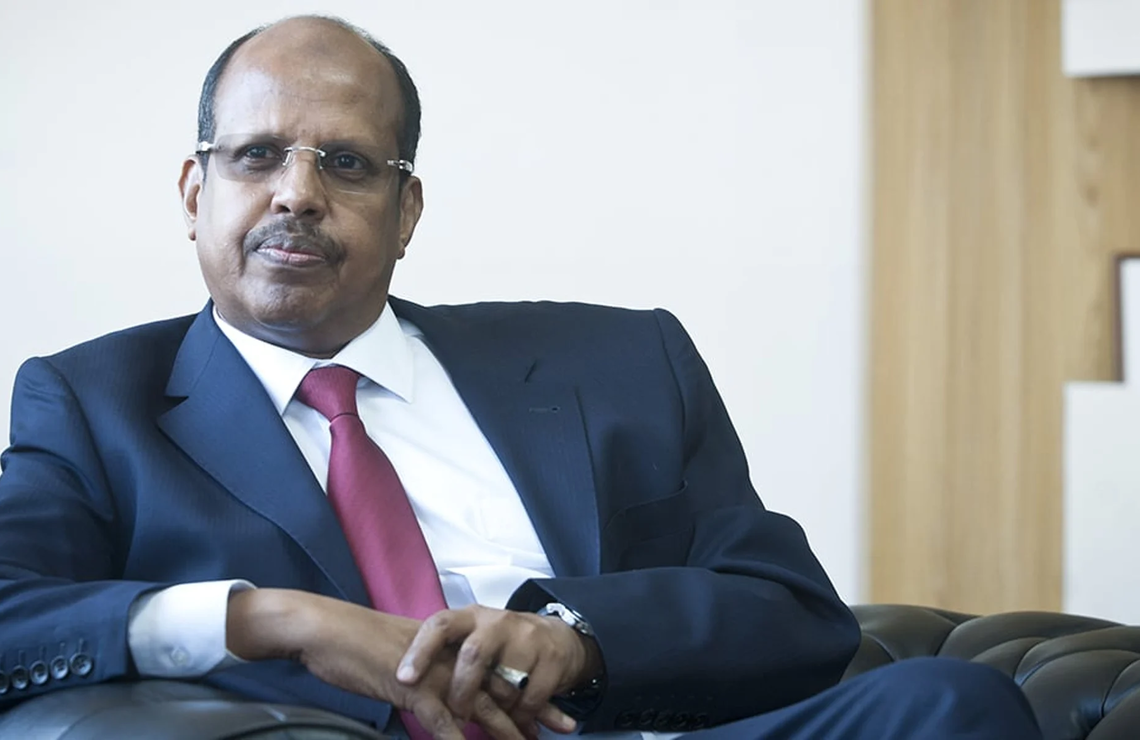
From the first hours of the bombings, the African Union was among the first international institutions to react. In an official statement, the President of the AU Commission, Mahamoud Ali Youssouf, made a solemn appeal for “restraint, urgent de-escalation, and sustained dialogue.”
In his message, the Djiboutian diplomat elected in February 2025 to head the pan-African institution warned of “serious consequences for energy markets, food security, and economic resilience – especially in Africa, where conflicts and economic pressures remain acute.” A warning that takes on particular resonance in a continent where tens of millions of people depend on global energy and food markets. By the end of the day on February 28, and in the face of the Iranian retaliation against Arab states, the AU issued a second statement condemning the Iranian missile and drone strikes against its neighbors.
South Africa between institutional measure and political vehemence
As a member of BRICS alongside Iran, South Africa found itself in a particularly delicate diplomatic position. President Cyril Ramaphosa issued a statement expressing “deep concern” over the escalation of tensions, calling on all parties to exercise “the utmost restraint.” The presidency also recalled, in the context of international law, that legitimate defense cannot be exercised preemptively, thus taking a critical stance towards the Israeli argument of “preemptive strike.”
The ruling political party ANC (African National Congress) went further, calling for an end to the “intimidation tactics of the United States” in the Middle East and reaffirming its commitment to the principle of non-aggression between sovereign nations. “Our position is always to disapprove of any attack on another state, whatever the reasons,” said a party leader.
Even more vehement, the Economic Freedom Fighters (EFF) of Julius Malema denounced in scathing terms a Washington-Tel Aviv alliance “resolutely determined to defend Israeli interests in the region, whatever the human cost,” emphasizing that Iran “has the right to defend itself” against a characterized aggression.
Abuja calls for a ceasefire and Dakar appeals to international law
The government of President Bola Tinubu chose a balanced but firm voice. The Nigerian Ministry of Foreign Affairs issued a statement calling on all parties to cease fire and return to the negotiating table, in the interest of global peace. This is “for the good of global coexistence,” according to the official text.
In parallel, Abuja issued an emergency consular alert for the many Nigerians residing in Iran and the Gulf countries affected by Iranian retaliatory strikes, advising them to limit their movements, avoid strategic areas, and strictly follow the directives of local authorities.
Dakar was among the first African capitals to speak out. In a statement from the Ministry of African Integration and Foreign Affairs, Senegal condemned the “use of force” as “a threat to the sovereignty of states and global stability,” while calling for an immediate ceasefire. Senegalese authorities emphasized that diplomacy remains “the only credible and sustainable path” to resolve the crisis, also urging their nationals in the region to exercise the utmost caution.
In Chad, condolences and double condemnation
Chadian President Mahamat Idriss Déby Itno’s reaction was particularly noteworthy for its personal and emotional dimension. After the announcement of the death of Ayatollah Khamenei on March 1, the Chadian head of state posted a message of condolences on his social networks: “It is with deep sadness that I learned of the death of the Guide of the Islamic Revolution, Ayatollah Ali Khamenei, which occurred in the tragic circumstances of the recent strikes. In this time of mourning, I wish to express my deepest and most heartfelt condolences to the Iranian government and people. Chad, committed to the principles of peace and international solidarity, shares the pain of the Iranian nation.”
But the Chadian president also condemned with equal firmness the Iranian missile strikes against Gulf countries, stating that N’Djamena could not endorse attacks on brotherly states, regardless of the origin.
Indignation in Algeria, Rabat condemns the retaliatory strikes
The Algerian press did not hesitate to describe the attacks as “American-Zionist strikes,” reflecting Algeria’s traditionally pro-Palestinian position in conflicts in the Middle East. Algeria, which shares with Iran a common mistrust of Western powers, called for an immediate ceasefire.
Practically, the national airline Air Algeria announced on Saturday, February 28 the suspension of its flights to Amman, Dubai, and Doha, citing “the highest standards of safety and security” for its passengers and crews. A decision that reflects the seriousness of the situation perceived from Algiers.
For its part, the positioning of the Kingdom of Morocco reflects the complexity of its geopolitical position. Signatory of the Abraham Accords in 2020, Rabat maintains strong military, security, and commercial ties with Tel Aviv. Not surprisingly, Morocco has not (yet) made a statement on the American-Israeli strikes against Iran. However, faced with missiles fired by Tehran against Arab states in the Gulf, the Kingdom issued a statement strongly denouncing the “abhorrent attacks” by Iranian missiles that violated the integrity and security of brotherly Arab states.
Beyond diplomatic positions, it is the economic impact that concerns African capitals to the highest degree. The suspension of Air Algeria flights, the surge in fuel prices in Nigeria, or the threat to Egypt’s energy supplies illustrate how this war thousands of kilometers away from the continent can weaken economies already under pressure.
*This text reports on the statements of the various African capitals available on March 1, 2026, at 3 p.m. GMT. Some official positions may evolve or be reported in the coming hours.

