



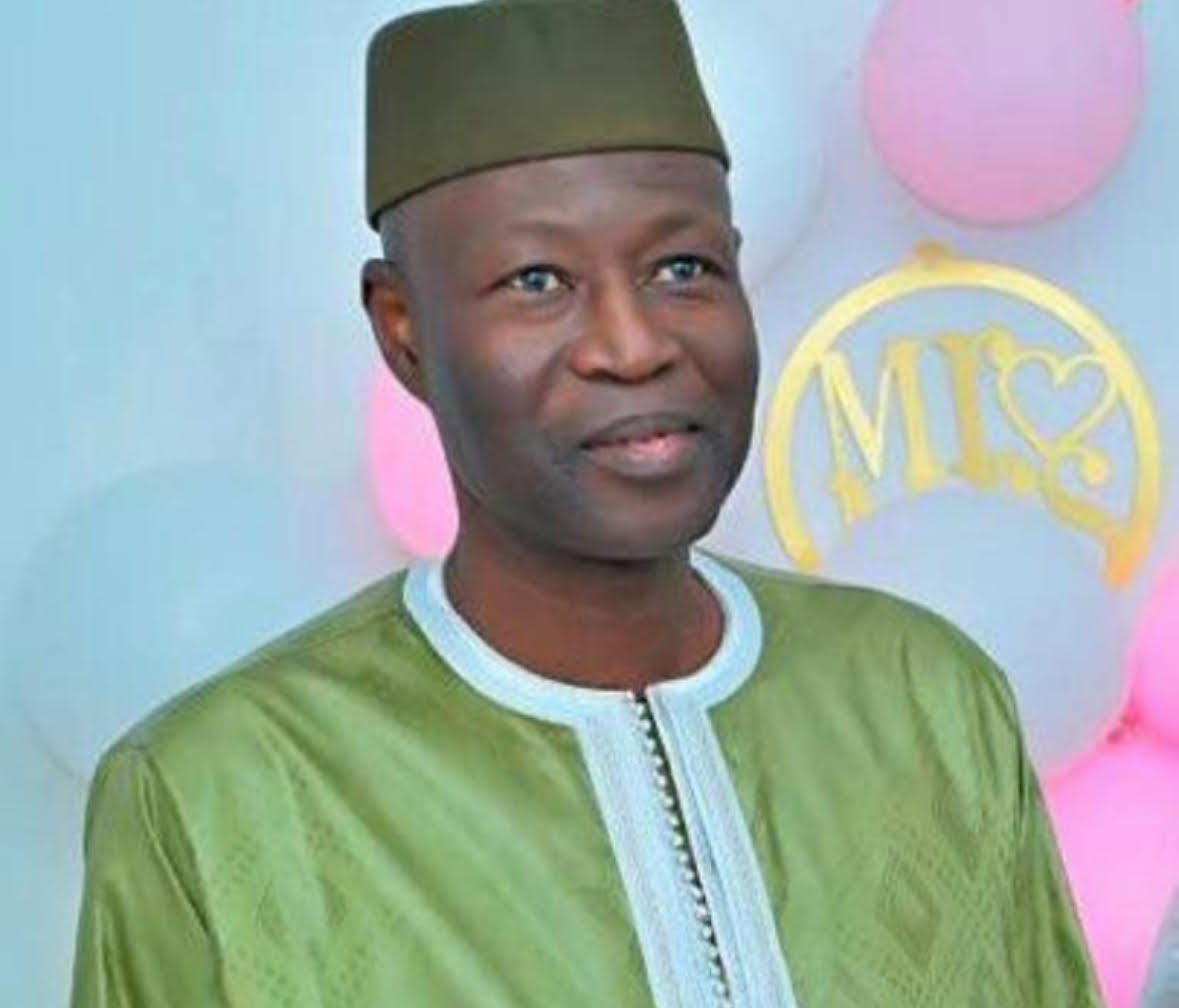
Professor Amath Ndiaye’s Tribune, FASEG-UCAD.
The statement released on February 8, 2026, following the statutory meetings of the Economic Community of West African States (ECOWAS) in Monrovia once again confirms the failure of the strategy adopted for the creation of the West African single currency, the ECO. After more than twenty years of announcements, successive timelines, and repeated delays, the reality is clear: the approach based on the prior respect of macroeconomic convergence criteria does not lead to the creation of a single currency in West Africa.
This does not mean that the ECO is an unrealistic ambition. On the contrary, the project remains relevant for regional integration. But it is now evident that the method chosen so far has reached its limits. The single currency can only emerge by building on an already operational and credible monetary union, rather than indefinitely waiting for perfect convergence between structurally heterogeneous economies.
Twenty years of missed deadlines: the symptom of an inadequate strategy
Since its launch, the ECO project has experienced a series of missed deadlines: 2003, 2005, 2009, 2015, 2020, and now 2027. With each delay, the justification remains the same: member states do not simultaneously meet the convergence criteria for inflation, budget deficit, debt, or external stability. But these repeated delays mainly reflect a conceptual error.
In a region characterized by heterogeneous economies, divergent productive structures, and unsynchronized macroeconomic cycles, demanding perfect convergence before monetary integration means indefinitely postponing the creation of a single currency. International experience shows that it is often common institutions that gradually create convergence, not the other way around.
Moving away from the false debate on the CFA franc
The debate on West African monetary integration is too often trapped in an ideological interpretation of the CFA franc, wrongly presented as a neocolonial currency or under foreign tutelage. This perception no longer corresponds to the current institutional reality. Since the major reforms initiated over the decades – complete Africanization of governance since 1973, withdrawal of French representatives from decision-making bodies, and closure of the operations account in 2019 – the monetary system now relies on African and regional management. It is therefore necessary to move beyond misconceptions and prejudices that cloud the economic debate.
The CFA franc should be understood not as a limitation of sovereignty, but as a form of collective or community monetary sovereignty. By pooling their foreign exchange reserves, the UEMOA countries have built a mechanism capable of ensuring:
– a credible fixed exchange rate,
– sustained low inflation, among the lowest on the continent,
– monetary stability rare in Africa.
Macroeconomic performance confirms this reality. The recent average growth of UEMOA countries has been around 4.5% to 5%, above the African average, while inflation has remained generally better contained than in several national currency economies exposed to recurrent depreciations.
The fixed exchange rate regime is often wrongly accused of harming UEMOA’s competitiveness. However, from 2013 to 2023, UEMOA countries on average have less pronounced trade deficits (-10.9% of GDP) than those in ZMOA with flexible exchange rates (-15.7%). Some countries with floating currencies even experience particularly high imbalances, while Côte d’Ivoire achieves a trade balance despite being pegged to the euro.
The real debate should not focus on a supposed lack of monetary sovereignty, but on the nature of this sovereignty: individual or collective.
Starting from a successful monetary union: UEMOA as the natural foundation of the ECO
Once rid of misconceptions, one conclusion is clear: the major mistake of the ECO project was to want to build a single currency ex nihilo for fifteen countries with very different economic trajectories, rather than relying on an already operational monetary architecture.
The UEMOA is currently the only fully integrated and functional monetary area in West Africa.
This reality is the result of a long process of reforms:
– institutional Africanization (1973),
– macroeconomic adjustment and restoration of competitiveness (1994),
– transformation of the institutional framework and increased autonomy (2019).
The results are tangible:
– monetary stability,
– controlled inflation,
– creation of an integrated regional financial market with the BRVM and UMOA-Titres.
Like the construction of the euro, the monetary union should not be created from prior perfect convergence, but from an existing institutional core.
A pragmatic strategy: ECOW as a transition currency towards the ECO
The realistic approach is to reverse the current logic: integrate first, converge later. In this perspective, the ECOW could play a key role as a transition currency, gradually replacing the CFA franc during the monetary union expansion phase.
The ECOW would allow:
– expanding the monetary union (UEMOA) to other ECOWAS countries,
– overcoming symbolic debates related to the CFA name,
– strengthening political support for the project,
– institutionally preparing for the final adoption of the ECO.
Centralizing and pooling foreign exchange reserves here is a major strategic instrument to stabilize African economies against external shocks.
A progressive trajectory could follow the following steps:
– first integrate small countries with fragile currencies;
– continue with Ghana;
– Integrate Nigeria in the final stage.
In conclusion, the ECO does not suffer from a lack of political will, but from a methodological error. West Africa already has a functional monetary core: the UEMOA. The real strategic choice is to gradually transform the CFA into ECOW, a transition currency towards the ECO, so that integration finally creates convergence.
About Prof. Amath Ndiaye, FASEG – UCAD
Prof. Amath Ndiaye is a prominent Senegalese economist, holding a State Doctorate in Economics from the Cheikh Anta Diop University of Dakar (2001) and a 3rd cycle Doctorate in Development Economics from the University of Grenoble, France (1987). Since 1987, he has been teaching at the Faculty of Economics and Management Sciences at the Cheikh Anta Diop University of Dakar. A recognized expert, he has collaborated with prestigious institutions such as the African Development Bank, the World Bank, and the IMF, specializing in exchange rates, economic growth, and institutional development. He was an expert member of the steering committee of the African Union Commission for the Creation of the African Central Bank. Prof. Ndiaye is the author of numerous influential publications, particularly on exchange rate regimes and economic growth in West Africa. Trilingual, he is fluent in Wolof, French, and English.

