



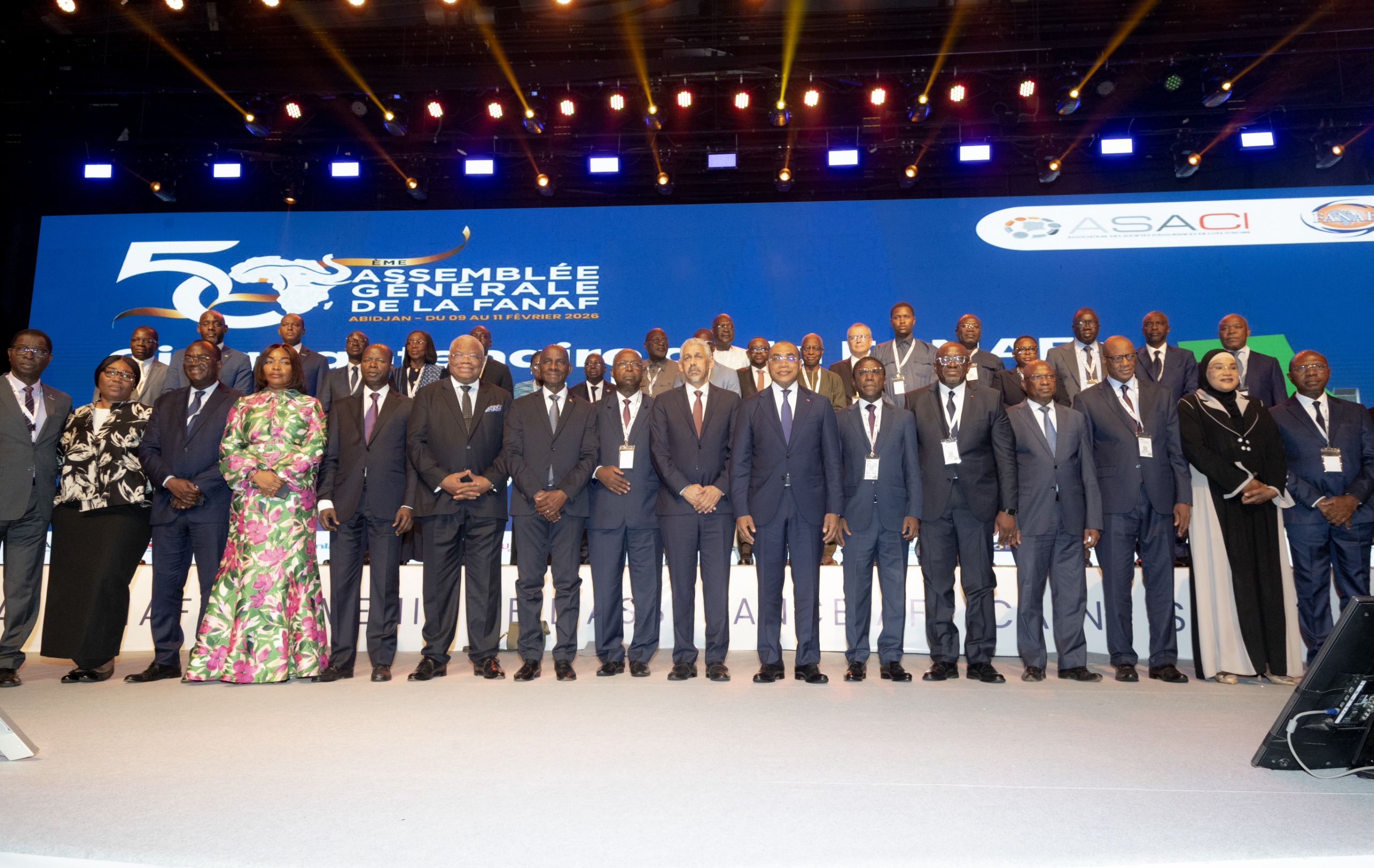
The opening of the 50th General Assembly of the Federation of African National Insurance Companies (FANAF) on Monday, February 9, 2026 in Abidjan, marks a historic milestone for the sector under the theme: “FANAF’s Fiftieth Anniversary: Building the Future of African Insurance”. This sectoral meeting, which brings together insurers, regulators, and international institutions, takes place in a context of profound transformation of the continental financial landscape. Representing Prime Minister Robert Beugré Mambé, Minister of Economy, Finance and Budget, Adama Coulibaly, emphasized the catalytic role of the federation in the emergence of regional champions, making insurance an essential instrument of stability for African economies.
Faced with a dynamic transformation marked by rapid urbanization and strong demographic growth, the minister urged insurance companies to move away from traditional patterns to invest in the field of emerging risks. He recalled that Africa is now facing increased vulnerabilities, both in terms of health, technology, security, and climate. In this perspective, insurance should no longer be seen as a simple mechanism of passive coverage, but as a strategic development lever and a long-term savings mobilization vector. Despite a penetration rate that remains at 3%, the sector has a crucial potential for macroeconomic resilience to support long-term productive investment.
One of the pillars of this disruptive strategy is the development of agricultural insurance, the result of an exemplary synergy between the Association of Insurance Companies of Côte d’Ivoire (ASACI) and the Ivorian government. Under the leadership of Koné Mamadou, president of ASACI, a technical collaboration with the Ministry of Agriculture was consolidated as early as 2025. This partnership aims to establish a framework of trust to protect producers’ incomes against climate shocks. Minister Adama Coulibaly reaffirmed that this specialization is an absolute priority to secure the national productive base and ensure social protection for rural populations most exposed to environmental hazards.
This initiative benefits from technical support from the African Development Bank (AfDB), illustrating the importance of public-private-multilateral partnerships in structuring resilient markets. This fund helps to overcome market failures and make insurance policies accessible to a larger number of people. By transforming agricultural risk into a manageable variable, this project is a driver of macroeconomic resilience, transforming the insurance sector into a central actor in national economic sovereignty.
In conclusion, the year 2026 highlights the efforts of ASACI and the Ivorian state in the structural transformation of the rural world. Integrating insurance into the agricultural value chain not only promotes the modernization of production techniques but also ensures financial stability in the face of external shocks. The alliance between political will, insurers’ expertise, and support from international donors now positions insurance as an essential safety net for sustainable development. This new paradigm, driven by FANAF, outlines the contours of a more inclusive African insurance industry capable of addressing the complex challenges of the 21st century.

