



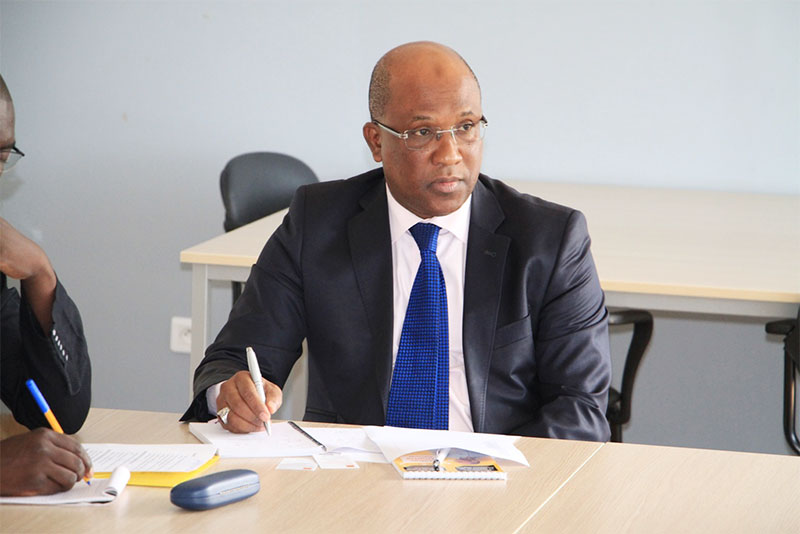
By Thierno Seydou Nourou SY, Banker, President and Founder of Nourou Financial Consulting (NFC) Dakar-Senegal
As international banking regulation enters a new phase with the finalization of Basel III – often referred to as “Basel 4” by practitioners –, countries in the West African Economic and Monetary Union (UEMOA) are faced with a strategic question: is it appropriate to further strengthen prudential requirements in a region where the banking system is already strong, while the need for financing the real economy remains significant?
Contrary to popular belief, “Basel 4” is not a new international agreement. It is the latest stage of Basel III, aiming to harmonize and tighten bank risk calculation methods, notably through the introduction of a floor for weighted assets and stricter limits on the use of internal models. In practice, this reform results in a mechanical increase in capital requirements for many banks.
However, the figures show that the UEMOA banking system is currently overall strong. According to the 2024 Annual Report of the UEMOA Banking Commission, the total balance sheet of credit institutions reached 72,068 billion FCFA, up 9.3% year-on-year. Customer loans amounted to 36,888 billion FCFA, a 5.6% increase. The average solvency ratio strengthened to 14.7%, well above the regulatory norm of 11.5%, while the gross non-performing loan ratio decreased to 8.5%.
These indicators reflect a real resilience of the regional banking sector. Therefore, the question is no longer about the stability of the system, but about its role in financing economic development.
Despite this strength, the real economy remains insufficiently financed. According to the World Bank, private sector credit represents about 26% of GDP in the UEMOA, a low level considering the needs for economic transformation. Even more concerning, only 24.4% of companies have a bank loan or credit line. Agriculture, which is central to employment and food security, only captures around 2% of total bank credit.
This situation is partly explained by the trade-offs induced by prudential regulation. Basel agreements are based on a simple principle: the riskier an asset is judged, the more capital it consumes. In developed economies, this trade-off is facilitated by deep markets, abundant data, and effective risk-sharing mechanisms. In the UEMOA, where SMEs often have incomplete financial statements and where guarantees are difficult to assess or execute, productive credit becomes mechanically more capital-intensive.
This dynamic is reinforced by macro-financial constraints. The International Monetary Fund highlights that sovereign exposures of Union banks accounted for nearly 38% of domestic assets in 2023. In a context of tightening liquidity, private sector credit growth decreased from 14.2% in 2022 to 10.3% in 2023. In 2024, the average lending rate stood at 6.76%, with a difference of over 100 basis points between large enterprises and SMEs.
In this context, the question must be asked directly: is it relevant to further tighten prudential ratios in the short term in the UEMOA ? The answer is no. No, as long as private sector credit remains structurally low. No, as long as the financing needs of SMEs, agriculture, and industry remain significant. No, as long as bank capital, although improving, remains insufficient to simultaneously support prudential tightening and credit expansion.
This is not about rejecting international standards, but about intelligently adapting them. Even the European Union has chosen to delay the full implementation of certain aspects of the reform until 2027, illustrating the need for a gradual and pragmatic approach.
For the UEMOA, a successful transition to “Basel 4” relies on three conditions. First, measure before deciding, through detailed quantitative impact studies, by bank and by economic segment. Then, adjust the implementation schedule, maintaining prudential fundamentals while phasing the most capital-intensive requirements. Finally, strengthen the credit ecosystem, notably through guarantee and risk-sharing mechanisms.
In this dynamic, artificial intelligence can play a key role, provided it is used pragmatically. In the UEMOA context, the priority uses are clear: scoring of SMEs based on actual transactional flows, early detection of sectoral defaults, and automation of prudential reporting to reduce compliance costs. The challenge is not sophisticated imported AI, but frugal, explainable AI focused on securing productive credit.
The transition to “Basel 4” should not be approached as a mere compliance obligation. In a region where the banking system has an average solvency ratio of 14.7%, but where private sector credit is capped at 26% of GDP, prudential tightening cannot be the immediate priority. Without adaptation, it will reinforce excessive caution. With sequencing and appropriate tools, it can become a lever for stability and development.

