



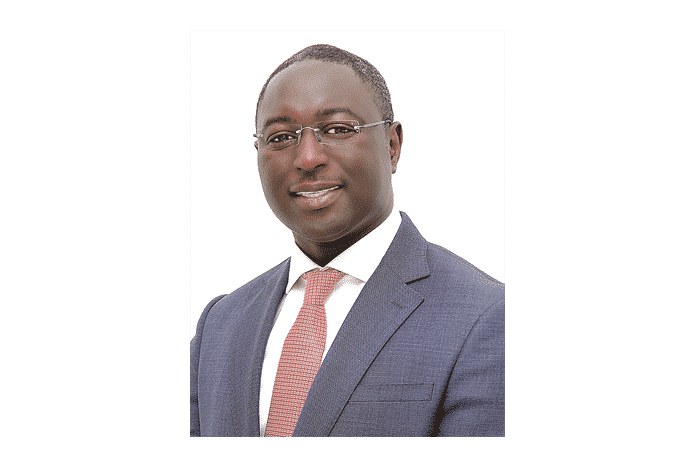
“At a time when regional financial markets are gaining depth and sophistication, IMPAXIS Securities stood out in 2025 with a series of structuring and innovative operations in the regional financial market. Sovereign and corporate borrowings, labeled operations, unprecedented securitizations: the past year marks a turning point for the management and intermediation company. Its Managing Director, Ababacar S. Diaw, looks back on the operations, the added value of Impaxis, and its prospects.
1. Strategic vision and positioning
How would you describe Impaxis’ strategic orientation in the past year?
First of all, allow us to thank our partners for their trust and to send them our best wishes for a very successful year 2026.
Impaxis’ strategic orientation in 2025 was resolutely focused on useful innovation and the structuring of tailor-made financial solutions designed to meet clearly identified needs.
We strengthened our position as a leading player offering a “one-stop shop” approach, capable of designing integrated solutions with a 360° vision.
IMPAXIS was the market leader in corporate borrowings, but we made a noticeable return to sovereign lending for the State of Senegal with an innovative approach that led to a strong mobilization of the diaspora. We were involved in five (5) fundraising operations in 2025, a record figure for a single year.
These achievements illustrate our commitment to transforming financial challenges into concrete opportunities and to sustainably supporting the economic development of the region through flagship operations with an innovative component on each of them.
IMPAXIS makes innovation a pillar of its growth and benefits the market. We can cite, for example, the first joint and solidarity bond issuance on the Regional Financial Market. This is an innovative Proof of Concept that will pave the way for other similar innovations.
On GSS borrowings as well, IMPAXIS paved the way through the BIDC GSS in 2024, the first in APE, and we distinguished ourselves again on the first Social Bond dedicated entirely to housing in the UEMOA zone with CRRH-UEMOA as well as the securitization of invoices for Senelec with our partner BOAD Securitization.
2. Investment banking and capital markets activity
What were the main market operations supported by Impaxis this year (bond issues, APE, fundraisings, specific structures)?
2025, as mentioned before, was a prosperous year with several unprecedented operations where our expertise in structuring and knowledge of investors in the zone and outside the zone led to resounding success:
1. the first joint and solidarity issuance on behalf of Nourmony Holding in February 2025 for 20 billion;
2. the first Social Bond entirely dedicated to housing for CRRH-UEMOA of 60 billion CFA francs in May 2025;
3. the first securitization of mortgage receivables of 10 billion for NSIA Banque Côte d’Ivoire in August 2025
4. A Public Offering for the State of Senegal of 454.5 billion CFA francs with a Diaspora component that allowed the participation of Senegalese people living in more than 50 countries;
5. and a labeled securitization operation (GSS and SLB) of 120 billion through invoice securitization in November 2025
What types of clients or issuers were at the heart of your activity (States, public institutions, private companies, financial institutions)?
From 2018 to 2024, IMPAXIS was very active in the non-sovereign segment (corporate and DFI) which confirmed our expertise. We worked extensively in the financial institutions sector (BHS, BIDC, BOAD, Fidelis Finance, CRRH UEMOA, NSIA Banque CI) and infrastructure (Senelec, Sonatel).
We made a noticeable return to sovereign lending in 2025 for the State of Senegal.
We are agnostic in terms of sector, and we owe it to the diversity of our teams and our way of working/thinking about files with a combined approach of investment banking and expertise in capital markets in the zone and outside the zone.
How does Impaxis concretely intervene in these operations (arranger role, lead manager, strategic advisor, structuring)?
IMPAXIS intervenes throughout the chain from advice, structuring, and placement, which are different links in a chain that cannot be dissociated. We were the lead arranger and Lead Manager on the operations of Nourmony, CRRH-UEMOA, and the State of Senegal. On the securitizations of NSIA Banque Côte d’Ivoire and Senelec, we were co-Lead Manager of these operations arranged by our partner BOAD Securitization. We played an important advisory role in these operations because we cannot place an operation that we do not understand and that we will face investors for placement. This is why our role cannot be limited to waiting for the operation to be structured to place it.
What volumes or orders of magnitude illustrate the level of activity achieved this year?
In 2025, we were involved in 5 operations mentioned above for a total volume of 664 billion CFA francs (1.1 billion dollars). This level of activity in terms of operations is a record for an SGI, especially an independent one, with major innovation in each operation.
3. Added value and expertise
What, in your opinion, is the differentiating value of Impaxis in the structuring and execution of these operations?
Impaxis’ differentiating value is based on the combination of three major assets:
• A multidisciplinary and experienced team: our employees have both international experience in developed markets and a deep understanding of the local context. Our teams bring together profiles from international Corporate Banking, M&A, Trading, Risk Management, and portfolio management, covering all the corporate finance and capital markets business lines. This diversity and complementarity allow us to provide relevant and tailored solutions for each situation.
• A disruptive and tailor-made approach: each fundraising is analyzed from the perspective of structured financing, taking into account the concerns of a rational investor and the constraints specific to the issuer. Each file is treated as unique, with a strategy adapted to its specificities.
• An ability to innovate in the interest of the financial market: we design innovative, secure, and high-performing solutions aimed at maximizing value for investors while supporting the growth of issuers and the sustainable development of the regional market.
This integrated and pragmatic approach allows us to transform complex financial challenges into concrete opportunities, illustrated by our pioneering reference operations in financial markets.
How does your expertise help secure operations in a sometimes constrained or volatile market context?
We have a permanent and constant dialogue with investors even outside operations. It is necessary to take into account investors who always have the final say on an operation through their subscriptions. This adaptability and ability to structure tailor-made solutions allow successful fundraising even during turbulent periods.
How does your approach contribute to strengthening the trust of investors and issuers?
We have a 360-degree approach to all files, allowing us to consider the perspective of issuers and investors. An operation can only be successful by putting oneself in the shoes of an investor and addressing the different questions. Our teams’ backgrounds in investment banking, portfolio management, and risk management give us this 360-degree view.
4. Contribution to market development
What lessons have you learned from the evolution of investor demand this year?
Innovation is an important element, but it is not about innovating for the sake of innovating but innovating to meet a need. A specific example is the joint and solidarity bond issuance made on behalf of Nourmony Holding. This issuance allowed, through an operation, to finance five entities in the private sector.
On the CRRH-UEMOA operation, through a robust structuring and the best possible SQS1 rating, Proparco was able to invest for the first time in the bond market of the UEMOA zone.
5. Challenges and challenges of the profession
What were the main challenges encountered in conducting operations this year?
2025 was a record year in terms of operations with an over-solicitation of the States of the Regional Financial Market. This aspect can make it more difficult to place non-sovereign operations.
IMPAXIS had to take this aspect into account to offer structuring adapted to the constraints of investors who have the choice between many operations. The structuring with the proposed security elements and the risk-return couple were differentiating factors in decision-making.
6. Perspectives and operational priorities
What are Impaxis’ priorities for the coming year in terms of investment banking and capital markets?
Our goal for 2026 is to offer a wide range to investors to allow them to find the product that fits their placement constraints in terms of duration, return, and risk appetite. You will see innovative products coming, but always with the aim of meeting a need.
Do you plan to introduce new types of instruments, sectors, or clients to support?
Certainly, and I think that as early as February, some of these products will be on the market. We cannot talk too much about it yet because we are waiting for the approvals of the competent authorities. We also aim to expand the base of investors, especially outside the zone. ESG products will continue to be popular.
How do you see the evolution of Impaxis’ role in African financial markets in the medium term?
IMPAXIS will continue to play a facilitator role in African capital markets. Capital markets should be seen in the broad sense, including the unlisted market, which represents a niche of opportunities and would allow certain entities to meet standards more easily to access the debt or equity market.
7. Conclusion – Institutional message
What message would you like to send to your clients, partners, and investors at the end of this year?
We would like to thank them for the trust they have placed in us by entrusting us with fundraising and to investors for their massive participation in our various operations. We hope to continue to enjoy this trust to raise even more funds, develop endogenous resources in a rapidly changing world.”

