



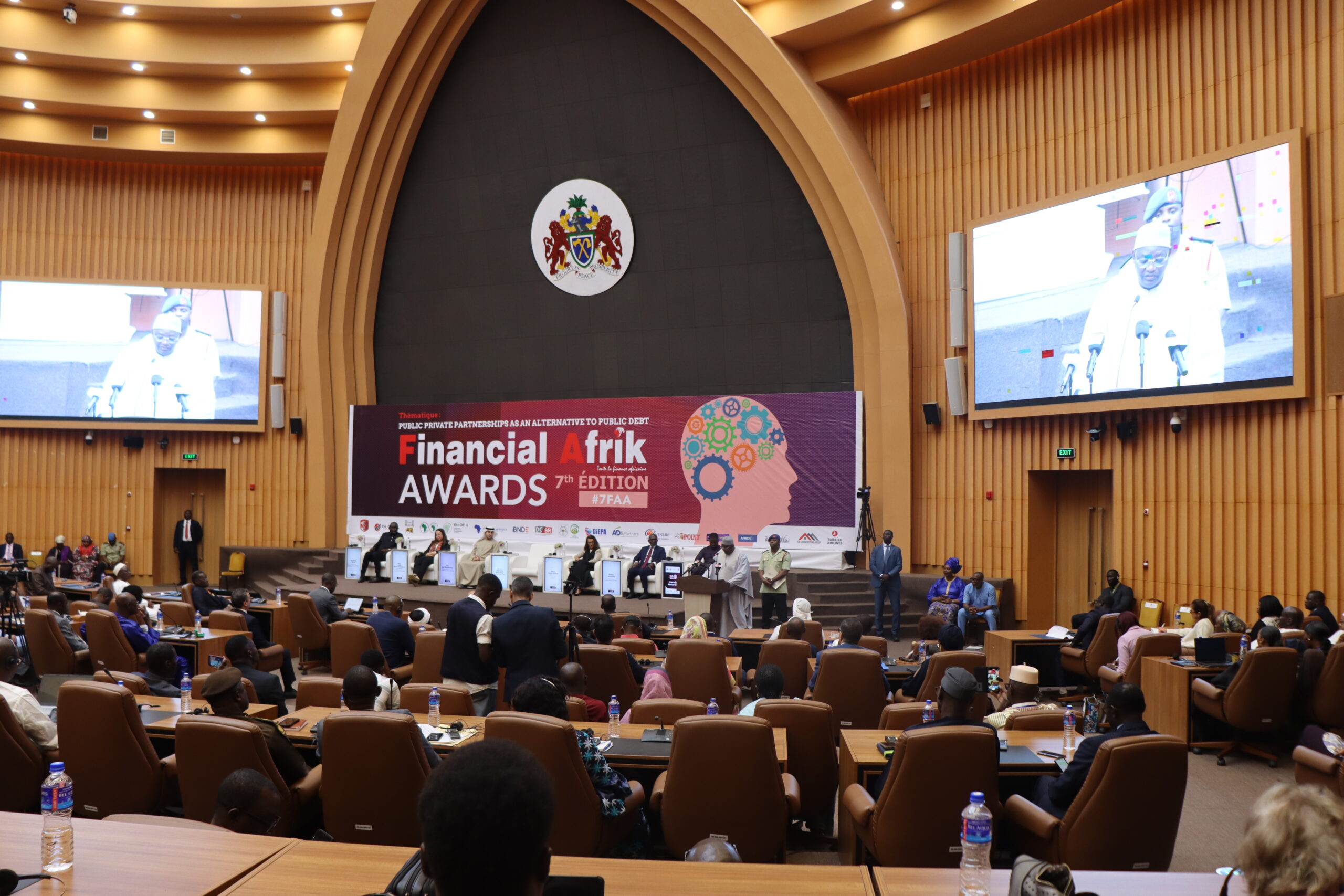
The official opening ceremony of the 7th edition of the Financial Afrik Awards (#7FAA), a now well-established event in the African economic agenda, took place on Friday, January 23 in Banjul, the Gambian capital. Chaired by the Head of State, Adama Barrow, highlighting the strategic importance of the event initiated in 2018.
Becoming a reference platform on development financing issues over the editions, the meeting brings together public decision-makers, investors, leaders of financial institutions, and major players in the private sector. This edition takes place in a macroeconomic context that is constraining for many African countries. The tightening of international financing conditions, the rise in interest rates, and the increased pressure on public finances indeed reduce budget margins and force governments to rethink their infrastructure financing strategies.
The chosen theme, “public-private partnerships (PPPs) as an alternative to public debt,” reflects this strategic evolution. For many African states, the challenge lies not only in access to financing but in establishing sustainable mechanisms that limit direct budget exposure while mobilizing long-term capital.
“A crucial platform for engaging in dialogue”
In his speech, Gambian President Adama Barrow emphasized the importance of macroeconomic discipline and structured private financing: “This year’s forum is held under a theme that is both timely and highly relevant: public-private partnerships as an alternative to public debt. Across the African continent, governments are facing increasing pressure to meet the development aspirations of our populations while preserving macroeconomic stability and fiscal sustainability,” he said.
“In this context, public-private partnerships, blended finance, and innovative investment structures are no longer optional instruments. They are essential pillars for sustainable development. This forum offers us a crucial platform for engaging in dialogue and focusing on concrete solutions to mobilize private capital for the continent’s growth,” added the Head of State, who prioritizes infrastructure.
Ousainou Senghore, Managing Director of the Gambia Investment and Export Promotion Agency (GIEPA), emphasizes: “Africa is at a pivotal moment in its history. We are determined to transform our institutions into drivers of industrialization, digital progress, climate resilience, and inclusive growth. By moving forward together, let us act with urgency, unity, and confidence, knowing that when Africa invests in itself, the benefits are not only economic, they are transformative.”
Making Africa its own “Eldorado”
For her part, Fazilah Dahall, President of the Financial Afrik Awards jury, notes that “Gambia is a nation whose influence far exceeds its size, a country marked by stability, openness, and the confidence of a people who are resolutely looking towards the future. It is the ideal host for an event that celebrates African ambition, leadership, and excellence.”
Also present at the ceremony, Senegalese social entrepreneur Thione Niang emphasizes the importance of youth. “Investing in youth is investing in Africa’s economic future. We must create more African leaders and champions to build a self-sufficient and prosperous continent. Africa can not only train its economic champions but also transform its growth and development sustainably,” he said. While inviting Africans to make their continent their own Eldorado.
Building on previous editions, the Financial Afrik Awards increasingly focus on economic and financial relations between Africa and the Arab world. A high-level roundtable brings together finance, energy, infrastructure, and Islamic finance actors, in a context marked by the growing interest of Arab investors in long-term African projects.
Positioning the country
For the host country, the event also serves as an economic showcase. The “Invest in The Gambia” sessions present structuring projects and investment opportunities, particularly through public-private partnerships. Gambian authorities seek to position the country as a stable and credible destination for investors, in a regional environment marked by political and economic uncertainties.
By bringing together public decision-makers, investors, and experts, this 7th edition raises a central question: can public-private partnerships constitute a credible and sustainable alternative to public debt in Africa? In Banjul, the debates aim to go beyond intentions to question the concrete feasibility of this model.

