



By Charles Blondin
Since the military junta took power following the Z generation protests in Madagascar, a hardening of the political climate has occurred in recent months. Contrary to a peaceful political transition, the government seems to have embarked on a palace revolution that could harm the interests of the Malagasy people in the long term.
In the fall of 2026, protests by the Z generation (Gen Z) erupted on the red island. Denouncing water and electricity distribution issues, the population took to the streets at the urging of opposition members of the Antananarivo Municipal Council, the capital of Madagascar. Quickly, the call to protest, relayed by civil society and on social networks, gained momentum and escalated. The looting and violence, manipulated by the opposition, forced the government to crack down. However, the authorities failed to stabilize the situation. President Rajoelina was forced to leave the country. Parliament voted for his impeachment on October 14 with 130 votes out of 163, leading to a military takeover.
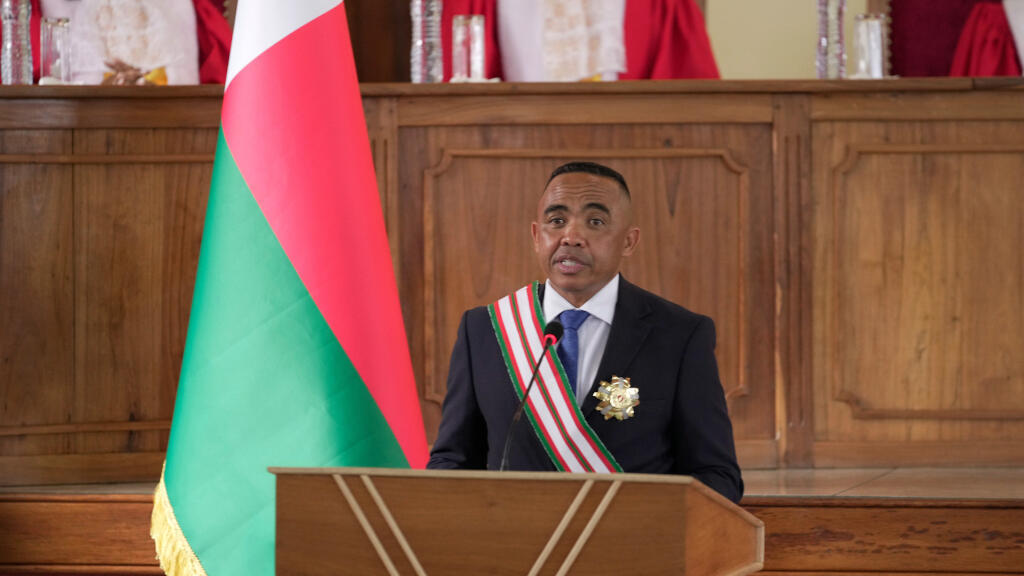
Since then, the country has been under a transitional regime led by Colonel Michaël Randrianirina. On social networks, which played a role in Andry Rajoelina’s downfall, the junta is criticized for confiscating the popular revolution. Several appeals have been made, especially by Gen Z, to not let the military steal this uprising. This fear is reinforced by the suspension of the constitution and the announcement of elections only in two years – at best.
Indeed, a process of refoundation has been announced around constitutional reform and the establishment of a new electoral system. Like in the Sahel, the junta is therefore expected to remain in power for several years without any legitimacy other than its seizure of power by force. The Southern African Development Community (SADC) is exerting diplomatic pressure, demanding a clear political roadmap by February 2026 to restore constitutional order and organize inclusive elections. At the same time, the African Union (AU) remains very attentive to the actions of the junta.
A palace revolution?
To strengthen its position, the authorities have embarked on what local sources describe as a witch hunt. This mainly involves breaking away from the Rajoelina government. Numerous legal proceedings have thus been carried out against political and institutional figures close to the former regime. Fanirisoa Ernaivo, a former exile and now Minister of Justice, is regularly cited by her detractors as one of the central figures in these attacks. For now, Colonel Michaël Randrianirina has not sought to oppose this dynamic, an attitude interpreted by some as a desire to preserve his room for maneuver.
In early January, Marie Michelle Sahondrarimalala, a deputy from Fianarantsoa and former minister, was arrested following the lifting of her parliamentary immunity. A procedure tainted with irregularities: according to the rules in force, such an arrest can only take place with the authorization of the Permanent Bureau, except in cases of flagrant offense, already authorized prosecution, or final conviction. However, none of these conditions seem to have been met. Furthermore, the reasons for the arrest have not been disclosed. The former minister is regularly portrayed as one of the targets of Fanirisoa Ernaivo, which some cite to explain her current troubles.
At the same time, Soalihy Moussa, a former presidential aide, faced intimidation, with a search at his home last December. Around the same time, Edgard Razafindravahy, the current Secretary General of the Indian Ocean Commission, was also subjected to a search, without any evidence to support a judicial accusation.
Finally, Richard Ravalomanana, former President of the Senate, was arrested after refusing to respond to a summons in an ongoing criminal procedure. He is accused of complicity in homicide, based on the allegation that he ordered the opening of fire on protesters during the riots last September in Antananarivo. However, his supporters strongly contest this accusation, recalling that the former Senate President was not part of any military chain of command and therefore had no authority to give operational orders to security forces.
Most of these proceedings have been justified by a fight against corruption. However, as a local business leader points out, “corruption in Madagascar did not start with Andry Rajoelina, and it is unlikely to end with a new regime.” A period of democratic instability proves to be unfavorable to the effective fight against corruption.
Worse, it fuels political tensions within the island. Not only because President Andry Rajoelina still has supporters in part of the population, but also because it fosters a climate of confrontation within the Malagasy elite. This confrontation could lead to a new coup. A fear acknowledged by the new regime, and which, according to some observers, explains a form of tolerance towards procedures perceived as politically motivated. Without total popular support, the junta would also seek to expand its circle of allies.
A fragile situation
Today, the military power relies on relatively weak political legitimacy. Strikes are multiplying in the country: internal, garbage collectors, and even the national water and electricity company (JIRAMA), etc. The government recently appointed a general to head the latter. A surprising move as it was precisely the distribution of water and electricity that sparked the popular revolt a few months ago.
Furthermore, the situation breeds mistrust among investors in a country still largely dependent on foreign investment flows, especially from France. It is worth noting that France remains one of the main investors in Madagascar, with around 38-40% of FDI in 2023 – 2024. Historically, France holds an important position in key sectors (energy, mining, telecommunications) and provides substantial aid: the AFD has committed 520 million euros over the past fifteen years through 67 projects.
In conclusion, this witch hunt benefits no one, especially not the Malagasy people who will not gain better access to basic public services through this means. However, this strategy presents the advantage, in the eyes of the junta, of contributing to its retention of power. As Hannah Arendt would probably have put it, where power begins, morality often ends.

