



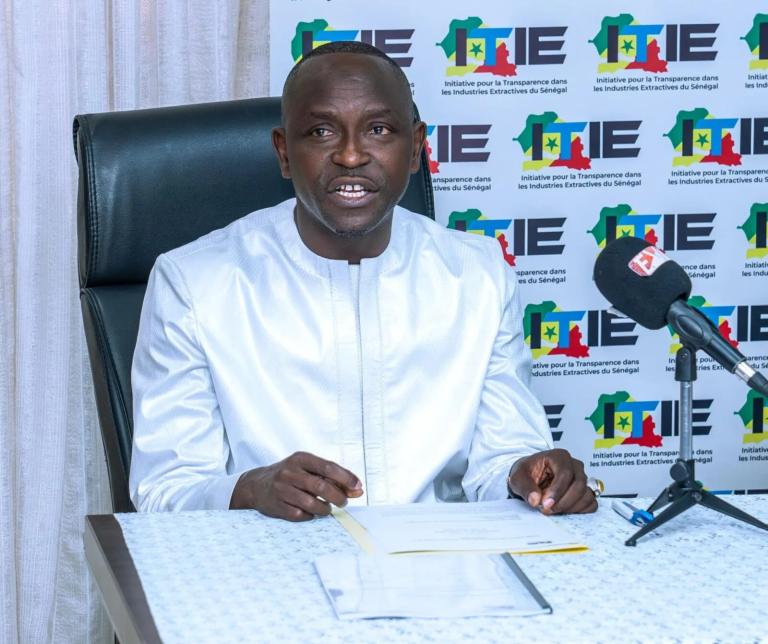
Senegal has officially presented its EITI 2024 Report, with data confirming its effective entry into the oil and gas era and opening a new chapter in its economic development. The launch ceremony, held on Tuesday, December 23 in Dakar, brought together public authorities, technical partners, and stakeholders in the extractive sector around a common goal: transforming natural wealth into a sustainable lever for growth and stability.
According to the report data, the overall contribution of the extractive sector reached 455 billion CFA francs in 2024, or approximately 758 million US dollars, marking a doubling in less than five years. This performance confirms the now central role of the extractive industries in the country’s macroeconomic architecture.
The year 2024 is also historic due to the effective start of oil and gas projects. The hydrocarbon sub-sector generated 77.7 billion CFA francs, or nearly 130 million dollars, compared to 51 million dollars in 2023. This rapid progression illustrates Senegal’s potential to become a credible new energy player in West Africa.
Another strong signal for investors is the momentum of local content. For the first time, transactions by national suppliers exceeded those of foreign companies, reaching 1,110 billion CFA francs (approximately 1.85 billion dollars), compared to 1.71 billion dollars for international suppliers. This evolution reflects the concrete impact of public policies aimed at structuring a competitive local industrial fabric.
However, the report also highlights structural challenges, including the lack of funding for the mining rehabilitation fund in 2023 and 2024. A key issue in a context where ESG criteria, environmental and social, are becoming decisive for the attractiveness of extractive projects on a global scale.
Speaking at the launch, Thialy Faye, President of the National EITI Committee, called for a paradigm shift: moving from a model focused on raw exports to local value-creating transformation, job creation, and economic resilience. He emphasized that the management of natural resources must reconcile economic profitability, national sovereignty, and social acceptability.
Aligned with the Senegal Vision 2050, the EITI 2024 Report emerges as a strategic tool for governance, transparency, and dialogue, offering policymakers, international investors, and technical partners a clear understanding of the opportunities and responsibilities associated with the growth of the Senegalese extractive sector.

