



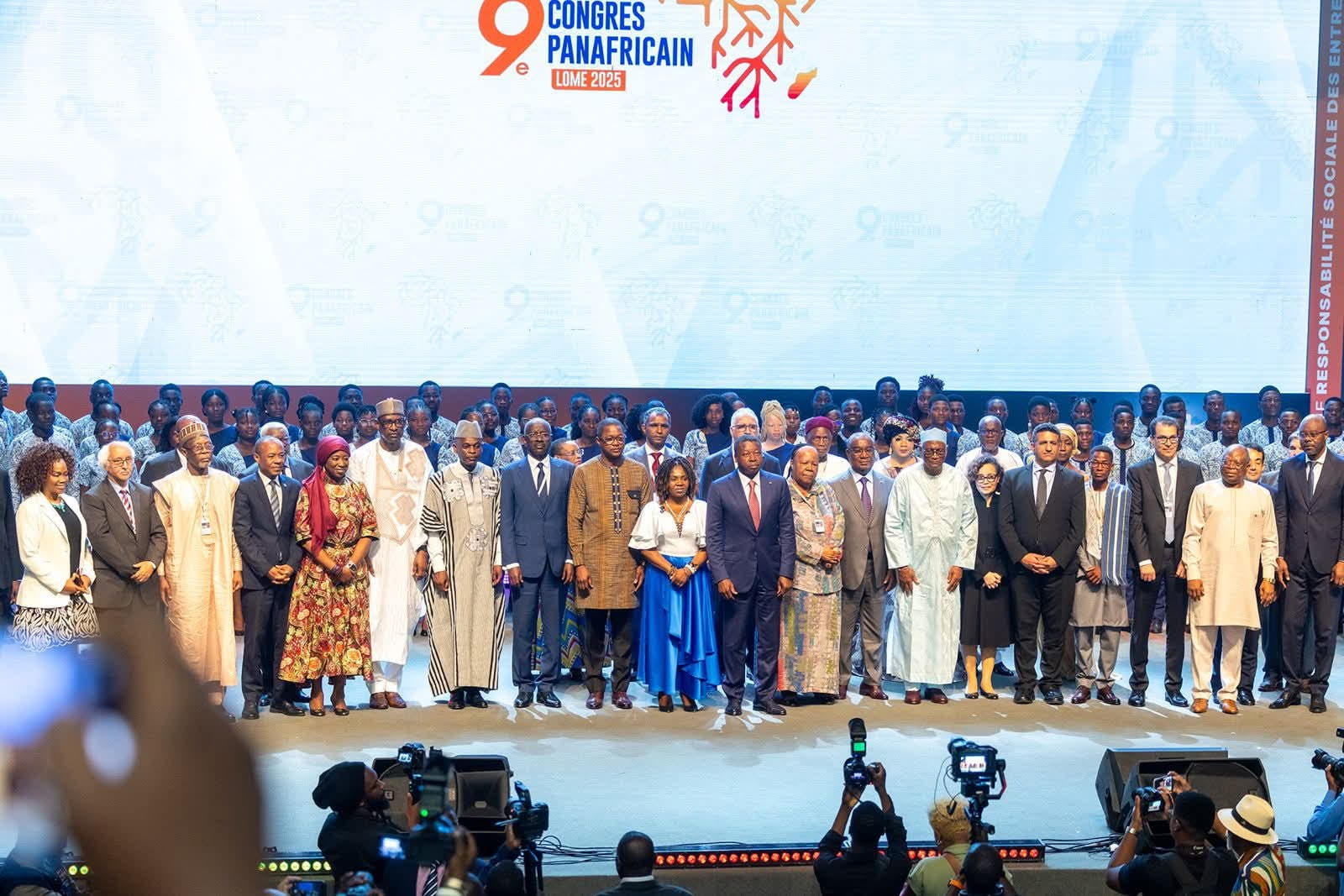
Under the auspices of the African Union, the 9th Pan-African Congress opened on December 8th in Lomé, bringing together delegations from across the continent, members of the African diaspora, and Afro-descendants from various backgrounds for five days of discussions on themes aimed at maintaining the flame of Pan-Africanism that has transcended generations for 125 years.
The opening ceremony, presided over by Faure Gnassingbé, President of the Togolese Council, highlighted the founding role of the Pan-African movement in the struggle for the emancipation of black peoples and in the decolonization struggles in Africa, the Caribbean, and Latin America. Inheriting a history that began in London in 1900, the Pan-African Congress is a series of international meetings bringing together African leaders, Afro-descendants, intellectuals, and organizations committed to defending the rights of black populations. After Dar es Salaam (1974), Kampala (1994), and Accra, Lomé becomes the fourth African capital to host the event, organized as part of the “Decade of African Roots and the African Diaspora (2021-2031)” proclaimed by the African Union.
This historic edition brings together states, AU institutions, civil society, artists, intellectuals, and diaspora organizations. An economic symposium, scheduled from December 9th to 12th, aims to further mobilize the diaspora around investment, project financing, and collaboration with development actors. More than a summit, the 9th Congress aims to be a strategic relaunch of Pan-Africanism in a changing global context. It offers a platform for reflection on Africa’s role in international governance, particularly in multilateral institution reforms, as emphasized by Faure Gnassingbé, the Vice President of Colombia, and the former Prime Minister of Costa Rica. Togo reaffirmed the demand for two permanent African seats with veto power on the Security Council. The Congress aims to strengthen unity among Africans on the continent, the diaspora, and Afro-descendants, promote cultural identity, encourage investment, support structuring projects, and make progress on issues of historical justice, such as heritage restitution, recognition of Afro-descendants, and reparations initiatives.
The main objective of this edition is to restore Pan-Africanism in its original dimension: a common vision focused on the future, allowing Africans and diasporas to “express a unified voice.” The chosen theme, “Renewal of Pan-Africanism and Africa’s role in the reform of multilateral institutions: mobilizing resources and reinventing oneself to act,” reflects this desire to reposition Africa in the international order.
Ultimately, the 9th Pan-African Congress in Lomé represents a major opportunity to rethink the links between the continent and its diasporas and redefine Africa’s place in the world. Its success, however, will depend on its ability to move beyond rhetoric, encourage citizen participation, translate recommendations into concrete actions, and anchor Pan-Africanism in daily life with equity, transparency, and inclusion.

