



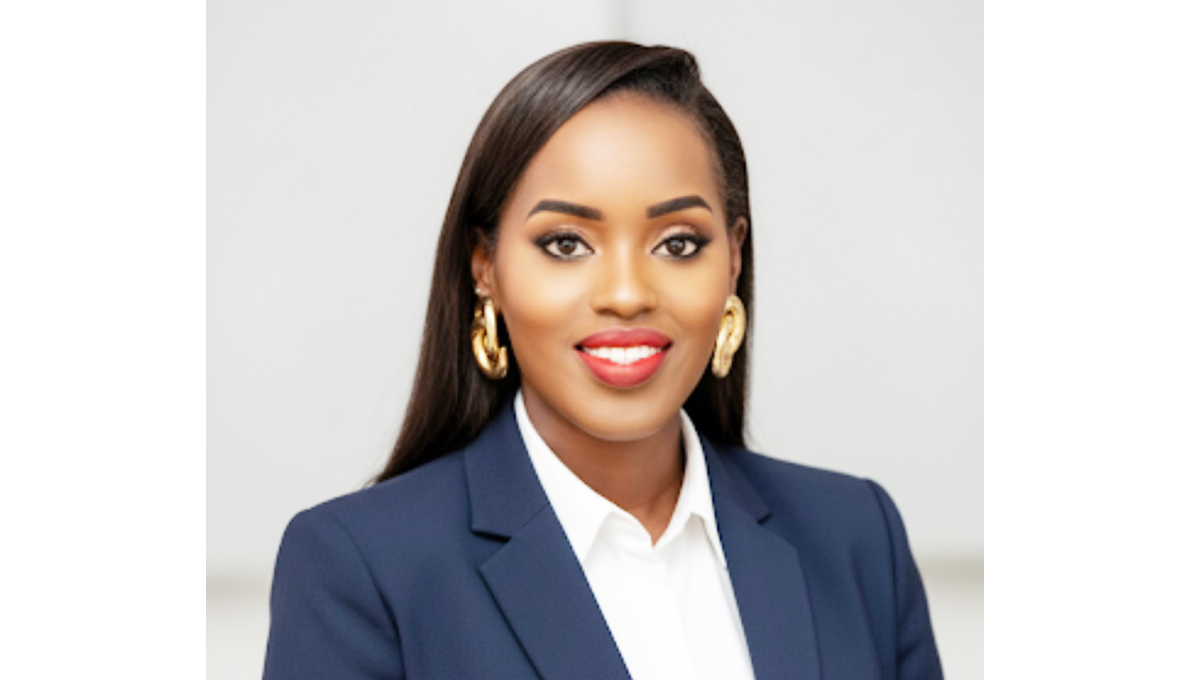
By Yasmine Aboubacar Sedikhe SY*
A continent in motion, elites out of sync?
Africa is going through a phase of transformation of an intensity rarely seen in its contemporary history. Data from the African Development Bank (AfDB, African Economic Outlook 2024) indicates that six of the ten fastest-growing economies in 2024 are African. At the same time, demographic projections from the United Nations (World Population Prospects 2022, United Nations Department of Economic and Social Affairs) predict a continent that will have nearly 2.5 billion inhabitants by 2050, with around 60% being under the age of 25. This dynamic creates an unprecedented window of opportunity.
But it also raises a fundamental question: does Africa have the elites capable of accompanying this historic shift?
Because behind the favorable indicators, a structural tension is emerging:
- economic growth faster than the governance that frames it,
- an ambitious youth more agile than the institutions meant to serve it,
- innovation progressing faster than the leadership models that should support it,
- increasing complexity surpassing the decision-making capacity of many public and private actors.
So the question is no longer about the continent’s potential. It is about its ability to train and renew a clear, strategic, and responsible leadership.
I. A continent in accelerated transformation: towards systemic complexity
African transformations are happening on multiple fronts simultaneously today, shaping a deeply renewed structural landscape. The continent is experiencing rapid urbanization, accompanied by a digital revolution estimated to reach a market value of USD 180 billion by 2030 according to the joint report by IFC-Google (e-Conomy Africa 2020).
In addition, there are particularly sensitive energy and climate transitions, regional geopolitical reconfigurations, as well as the emergence of more demanding and better-informed public opinions. At the same time, technology is playing an increasingly important role in governance, profoundly altering expectations, practices, and institutional balances.
The year 2023 illustrated this dynamic: foreign direct investments reached USD 80 billion according to UNCTAD (World Investment Report 2024), while infrastructures are multiplying and entrepreneurial ecosystems are experiencing unprecedented acceleration.
However, despite this vitality, governance, management, and decision-making systems are not evolving at the same pace. Institutional strategies often remain reactive rather than prospective; organizations move forward in a fragmented manner; crises are frequently poorly anticipated and managed; and many structural reforms remain unfinished or difficult to sustain.
McKinsey’s work shows that nearly 70% of organizational transformations fail in Africa mainly due to human factors, including lack of strategic alignment, weak steering, and insufficient management skills (McKinsey Global Institute, 2023). Thus, it is not financing or talent that Africa lacks, but rather the ability to mobilize leadership capable of dealing with the complexity of the moment.
II. The real African deficit: a deficit of visionary leadership
Restoring meaning to the term “leadership”
In a world where the word leadership is used excessively, to the point of losing its substance, it becomes essential to redefine it precisely. By leadership, we mean here the ability of an individual or an institution to formulate a clear vision, mobilize diverse actors around a common goal, make consistent decisions in uncertainty, and embody ethical responsibility in actions.
This definition follows in the footsteps of the foundational works of James MacGregor Burns (1978) and Bernard Bass (1985), who conceive of leadership not as a status, but as a process of influence, vision, and transformation, integrating a deeply ethical and relational dimension.
Contrary to a widely held belief, the main obstacle to African development does not lie in a lack of resources. Financing is indeed present: diaspora transfers reach nearly USD 100 billion per year according to the World Bank (Migration and Development Brief, 2024), regional and international institutions inject around USD 50 billion in annual financing, and African sovereign funds alone represent nearly USD 100 billion in mobilizable investment capacity. Human capital is not to blame either: the continent produces over 10 million graduates trained each year in its universities, according to the Association of African Universities (AAU).
If the potential is immense, the real deficit lies elsewhere: in the quality of leadership, institutional maturity, and coherence of decision-making processes. Several indicators can measure this misalignment.
A Deloitte study shows that nearly 60% of African leaders struggle to project beyond a strategic horizon of three years, limiting organizations’ ability to build sustainable trajectories.
The African Union estimates the cost of poor governance at USD 148 billion per year, one of the heaviest macroeconomic handicaps on the continent. PwC notes that 90% of internal crises in African organizations originate from human factors, often related to governance or communication failures. The World Bank estimates that managerial deficits on average reduce the productivity of African companies by 20%.
Africa is thus facing a quadruple deficit: a deficit of strategic vision, a deficit of organizational coherence, a deficit of governance responsibility, and a deficit of decision-making capacity in uncertainty.
This deficit is less visible than economic or demographic statistics, but it remains the most decisive and probably the most costly for the continent’s future.
III. The five cardinal skills of future African leadership
The emergence of a renewed African leadership can only materialize through targeted skills development, capable of embracing the economic, institutional, and societal transformations of the continent. Five skills appear today as truly structuring to accompany the ongoing mutations.
The first is strategic vision, which consists of articulating a long-term perspective in an environment marked by global volatility. The leader must be able to decipher major trends – energy transitions, digital transformation, rise of artificial intelligence, geopolitical reconfigurations – in order to anticipate disruptions, formulate a clear direction, and align organizations around coherent objectives. Without vision, structures drift; with vision, they move forward.
The second skill is influence communication, which becomes central in institutional environments where trust is a strategic asset. Contemporary leadership is no longer based solely on formal authority but on the ability to reassure in uncertainty, convince in ambiguity, unite in diversity, and inspire in difficulty.
The third skill is emotional intelligence, which has become a major determinant of organizational stability and performance. African organizations, young, diverse, and sensitive to social symbols, require leaders capable of listening, defusing tensions, providing appropriate guidance, and fostering lasting unity.
The fourth skill is decisional ethics, the invisible architecture of trust and legitimacy. Ethics is not a moral stance: it structures the sustainability of institutions, conditions the quality of governance, and determines economic attractiveness.
Finally, the fifth skill concerns innovation in uncertain contexts: testing quickly, learning fast, pivoting when necessary, and inventing adapted models rather than mechanically reproducing those from elsewhere.
IV. Training African elites: an economic, political, and civilizational imperative
The issue of leadership goes far beyond the individual sphere: it structures collective performance, institutional stability, and the economic trajectory of the continent. In companies, the quality of leadership directly influences productivity, innovation, and competitiveness; the World Bank estimates that managerial deficits can reduce the productivity of African organizations by 25%.
In family businesses, the issue is equally vital. Nearly 70% fail during the transition to the second generation due to lack of structured succession arrangements, according to Deloitte. As for the youth, the AfDB reminds us that Africa will need to create 22 million jobs per year by 2030: an impossible challenge to meet without elites capable of turning demographic potential into economic dividends.
Training African leaders is therefore about consolidating stronger institutions, more resilient organizations, a more competitive economy, a more stable society, and a continent more confident in its future. It is not only an economic and political imperative but also a civilizational one.
For an African leadership capable of embracing the complexity of the century
This opinion piece does not claim to open the debate on African leadership; it is part of a reflection already fueled by economic, sociological, and political contributions published in recent years. But it reminds us of an obvious fact: the transformation of the continent depends not only on its economic or demographic resources but on how its current and future leaders will articulate vision, governance, and responsibility in a deeply uncertain environment.
Africa now has considerable potential. It can become one of the major poles of growth, innovation, and value creation of the 21st century. But to achieve this ambition, it must invest massively in the training, structuring, and renewal of its elites.
The essential question is not only how Africa will develop, but who will lead it and with what skills. Leadership is now a civilizational determinant, a major lever for prosperity and stability.
Africa will succeed through its leadership before succeeding through its resources.
The silent revolution of African elites must begin now, with lucidity, responsibility, and ambition.
Cited references:
Burns, J. M. (1978). Leadership. New York: Harper & Row.
Bass, B. M. (1985). Leadership and Performance Beyond Expectations. Free
Press
African Development Bank (AfDB): African Economic Outlook 2024.
UNCTAD (2024). World Investment Report.
IFC & Google (2020). e-Conomy Africa 2020.
McKinsey Global Institute (2023).
United Nations – UN DESA (2022). World Population Prospects.
African Union (AU). Agenda 2063 reporting series.
World Bank (2024). Enterprise Surveys & Productivity Reports.
PwC Africa (2023). Crisis and Leadership Report.
Deloitte Africa (2023). CEO Outlook.
World Bank. Migration and Development Brief (2024).
IFC-Google (2020). e-Conomy Africa.
Deloitte (2023). Africa Family Business Survey.
PwC (2022). Global Family Business Survey.
African Development Bank (AfDB). Jobs for Youth in Africa Strategy.
Biography of Yasmine Aboubacar Sedikhe SY
Yasmine Aboubacar Sedikhe SY is a Senegalese-Djiboutian leader, Deputy General Manager, and teacher-researcher at Groupe Supdeco Dakar, one of the leading groups in private higher education in Senegal and Africa. An entrepreneur in the education sector for nearly two decades, she plays a decisive role in the strategic transformation of Groupe Supdeco, bringing a demanding vision based on pedagogical innovation, academic excellence, and intellectual sovereignty.
Specializing in leadership, governance, and organizational transformation, she advises leaders, senior executives, as well as public and private institutions, while actively contributing to the design and development of Executive Education programs aimed at strengthening the skills of African leaders. Her research focuses on entrepreneurship, family businesses, succession dynamics, and governance systems within African organizations. She regularly publishes analyses on the future of leadership, education, and management in Africa, as well as on the issues of transmission, institutional development, and societal transformation in the contemporary African context.

