



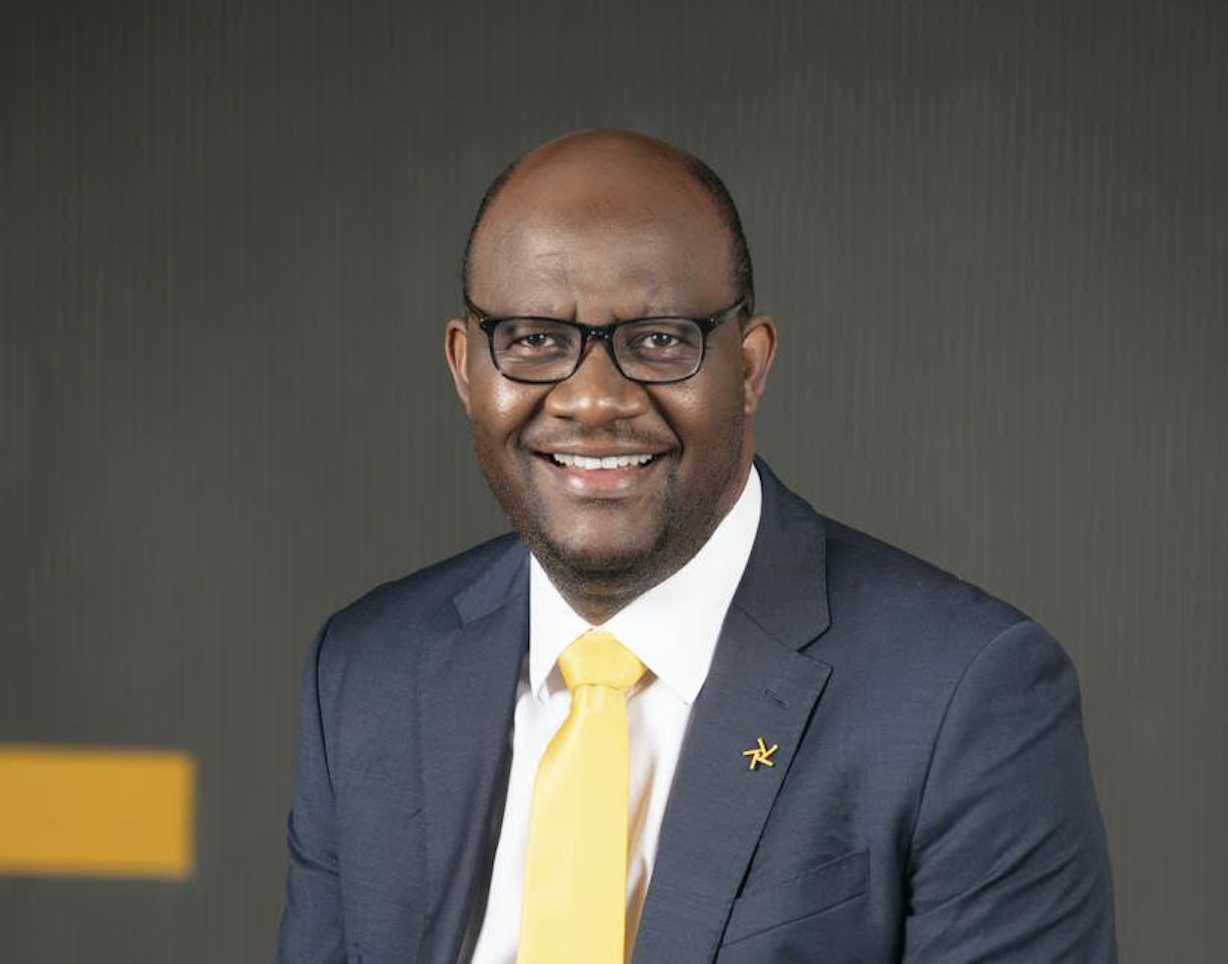
First African development insurer, the African Trade & Investment Development Insurance (ATIDI) makes scaling up a condition for economic sovereignty. On the sidelines of the Africa Investment Forum (AIF) held from November 26 to 28, 2025 in Rabat, the capital of Morocco, its CEO, Manuel Moses, emphasizes the need to cover investment risks to unlock capital, structure regional guarantees – RCTG, PoRSA, RLSF – and build a model capable of accelerating commercial integration driven by the AfCFTA. Amid infrastructure deficits, global volatility, and continental opportunities, ATIDI positions itself as a structuring lever for financing and a catalyst for sustainable investments in Africa.
In a continent where structural deficits remain deep – the question is no longer just “how to finance”, but “how to insure”. Because without trust, there is neither patient capital, nor large-scale projects, nor effective economic integration. By participating in this new edition of the AIF, ATIDI is not just occupying an institutional seat: it is reminding us that a development insurer is not just a safety net, but an accelerator. As a historic partner of the African Development Bank since its entry into the capital in 2013, ATIDI not only covers risks: it structures solutions that reduce frictions, unlock sovereign loans, and gradually integrate into the emergence strategies of states.
Furthermore, the guarantee is not a traditional insurance product, but a lever of competitiveness, a tool for regional coordination, and a key vector for the credibility of cross-border projects. In this exclusive interview with Financial Afrik, Manuel Moses, CEO of the Insurance for Trade and Investment Development in Africa (ATIDI), decrypts the major topics of this ecosystem.
Why is ATIDI involved in the Africa Investment Forum?
First and foremost, I would like to salute the organizers for the exceptional quality of the event. The Africa Investment Forum (AIF) is a unique platform that brings together the entire development ecosystem, both to reflect together and to facilitate the realization of transactions, with the aim of supporting the economic emergence of the African continent. As the first development insurer in Africa, we are delighted to contribute to the success of the AIF. Our presence is also a symbol of our strong partnership with the African Development Bank, which joined our capital in 2013 by becoming a shareholder of ATIDI. Since then, it actively supports our dynamic membership of member states, with nearly 60 million dollars in financing granted to several countries engaged in the process of joining ATIDI.
It should also be noted that the African Development Bank is also a user of our solutions:
We insured a $159 million loan granted by the African Development Bank to finance the expansion of Ethiopian Airlines’ fleet, notably through the acquisition of an Airbus A350-900.
We also supported a significant $500 million credit insurance agreement, structured to cover part of their non-sovereign operations portfolio in Africa.
In December 2023, ATIDI became a strategic partner of the Lusophone Development Compact (LDC), an initiative led by the African Development Bank. In this context, we deploy our risk mitigation solutions in LDC member countries, with the ambition of making it a powerful regional economic hub.
Finally, we maintain regular exchanges with the President of the African Development Bank, Sidi Ould Tah, as well as with his administration, to further strengthen support for the institution’s ambitious agenda. We are fully committed to playing our role in this project.
How does the development financing ecosystem reach the necessary scale to produce the expected impact?
Faced with the immense development deficits that Africa is experiencing, it is crucial that the development financing ecosystem reaches a sufficient scale to unlock the continent’s true potential and ensure its sustainable growth. Several key factors are essential for this scaling up:
-The quality and financial viability (bankability) of projects.
-The involvement of stakeholders, both public and private.
-The clarity of the expected impact.
-Respect for the environment and the eco-responsible nature of initiatives.
Projects must also target the most urgent and strategic sectors for the African economy: infrastructure, energy, agriculture, telecommunications, among others. However, a fundamental and transversal lever to enable these large-scale projects is the mastery and mitigation of the risks that investors face. This is precisely where ATIDI comes in: Our recognized status as the leading development insurer in Africa, our track record of transactions, and our high rating allow us to give investors the confidence they need to deploy capital on the continent, as they know that their investments are protected against unforeseen obstacles. Therefore, we play an essential role in the realization of large-scale projects, enabling profound transformations. We are true catalysts for African development.
How do ATIDI’s latest products (RCTG, PoRSA, RLSF) contribute to achieving this scale?
We are constantly working to strengthen our product offering to meet the requirements of an increasingly complex, volatile, and rapidly changing sector, while supporting vital sectors for the economic emergence of Africa.
These three solutions are part of this strategy:
Access to energy
Through the Regional Liquidity Support Facility (RLSF), deployed in partnership with KfW Development Bank and the Norwegian Agency for Development Cooperation (Norad). RLSF is a guarantee mechanism for independent renewable energy producers (IPPs). It protects these producers against payment delays from public buyers, usually national electricity companies. To date, this facility has mobilized $433.5 million in investments in renewable energy, supporting the production of 223 MW of clean energy in several African countries.
Financing African SMEs
We deploy the PoRSA product (Portfolio Risk Sharing Agreement), with the support of the African Union and KfW Development Bank. This solution helps mitigate risks borne by local financial institutions, thus improving access to financing for SMEs, true pillars of our African economies and generating up to 90% of jobs and income in some countries on the continent.
Cross-border trade
Our RCTG product, the Regional Customs Transit Guarantee (RCTG), is a unique guarantee to simplify goods transit procedures across African borders. This device is structured jointly with Africa-Re, Afreximbank, COMESA, Zep-Re, and ZEP-RE. It is a major lever to reduce costs and accelerate transit times for carriers – an essential condition for the success and effective implementation of the African Continental Free Trade Agreement.
Each of our solutions targets critical sectors and is designed to remove structural barriers, enable capital mobilization, and provide states with the means to make lasting and real changes. Their deployment is gradual across the continent, with the aim of increasing scale and impact, one transaction at a time. We also remain open to integrating these solutions into larger cooperative initiatives.
Do you think a “one-stop shop” for development insurance makes sense for Africa?
This concept undoubtedly makes sense, given the immense challenges facing the continent. For example, Africa needs to mobilize around $170 billion additional per year just to bridge infrastructure deficits (energy, water, transport). Yet, in 2024, it only captured 6% of global foreign direct investment, and only 6% of global FDI flows. Strengthening collaboration in the sector would optimize impact and accelerate the achievement of the necessary scale to meet these needs.
ATIDI is actively working towards this, notably by:
-Strengthening our partnership with development financing institutions such as the African Development Bank, to align and co-deploy our solutions in their portfolios;
-Initiating or jointly developing innovative products with our technical and financial partners;
-Signing risk-sharing agreements with export credit agencies, including: CESCE, SACE, Turk EximBank, Exim Hungary, ECI Dubai, Qatar Development Bank, etc.
The AfCFTA, which is now the world’s largest integrated market in terms of the number of countries, offers a historic opportunity to activate large-scale projects and concretely improve the lives of 1.5 billion African consumers. However, such an impact will only be possible through massive mobilization of investments.
In a global economic environment marked by uncertainty, risk mitigation through solid and proven solutions that protect investors and their capital against unforeseen events is the key to providing the level of trust required and necessary for their engagement in Africa.

