




Es-Semara was once thought to be condemned to sand and the memory of caravans; now it is propelled to the status of a Moroccan geo-economic outpost, on the eve of the fiftieth anniversary of the Green March. In this city located 200 kilometers east of Laâyoune, where salt, gold, and gum arabic were once traded, a more structuring project is now taking shape: to restore sovereign access to the Atlantic for the Sahel, by connecting Es-Semara to Zoueratt and then to the Sahelian heart — Timbuktu, Bamako, Niamey, N’Djamena.
At the center of this story is a simple equation that diplomatic circles too often pretend to ignore: without corridors, there is no commerce; without ports, there is no prosperity; without logistics, there is no integration. When Africa loses 30% of the value of its goods in logistics costs — compared to 8% in Europe and 10% in Asia — it is no longer a handicap, but a condemnation. In Chad, a quintessential landlocked country, the nearest port is 1,600 kilometers away; transporting a ton of goods costs nearly $120, with a transit time of between 7 and 15 days. It’s no wonder then, about the cost of bread or cement.
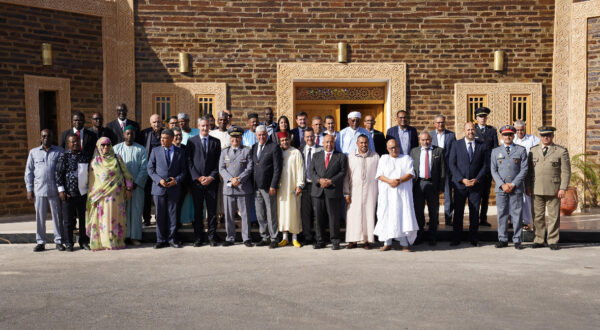
The Moroccan initiative, unveiled from Es-Semara, aims to overturn this paradigm. A trans-Saharan corridor, structured around the Es-Semara-Zoueratt section — the missing link of the Atlantic-Sahelian backbone — will reconnect Mauritania, Mali, Burkina Faso, Niger, and Chad to a network of ports among the most competitive on the continent: Tanger Med, Casablanca, Jorf Lasfar, Agadir, Laâyoune, Dakhla Atlantique. The result will be a 20 to 25% reduction in distance to the Sahel, saving two to four days on long-haul trips. In logistics, this is a decade of catching up in one stroke.
The vision does not stop at the asphalt. One-stop border posts (OSBPs), free zones, cold chains, heavy-duty workshops, a liaison office for the French Chamber of Commerce, active presence of the African Chamber of Commerce: everything contributes to transforming an economic axis into a development corridor, to use the words of the governor of Es-Semara, Ibrahim Boutoumilat. This is where history meets geopolitics: after securing its Atlantic flank and projecting Tanger Med as a global hub, Morocco extends its strategic depth towards the Sahel, assuming a role as the Atlantic gateway of the continent.
This bet is not extravagant. The world is full of examples: Khorgos, once a Kazakh-Chinese no man’s land, has become a platform for 20 million tons thanks to an integrated customs system; Duqm, an Omani port transformed into a new city of 25,000 inhabitants; Iquique, in Chile, whose free zone status has tripled the population in thirty years. Corridors, when planned, funded, protected, become growth engines. When forgotten, they become mental, then social, then security borders.
Africa suffers less from a resource problem than from a territorial planning problem. Its cities clog the coast, its riches sleep inland, its roads hesitate, its ports struggle, its trucks wear out, its dreams wait. By tracing this new Es-Semara-Zoueratt axis, Morocco is not just drawing a road: it is reactivating a continental ambition, that of connecting peoples rather than juxtaposing enclaves. Caravans used to pass through here; tomorrow, agro-industrial, mining, energy, logistics, and digital flows will circulate.
Perhaps the true silent revolution of the Sahara lies here: not to conquer space, but to connect it.

