



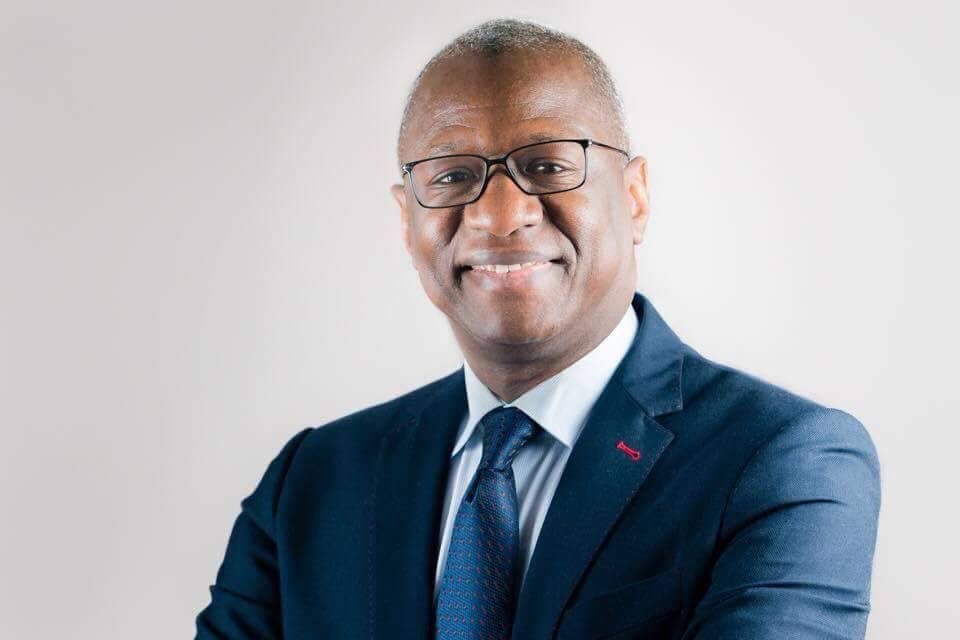
By Mamadou Ismaïla KONATÉ
Lawyer at the Court – Bars of Mali and Paris
Former Minister of Justice.
Following an announcement of temporary suspension of its road services to Mali, the CMA-CGM group, a global giant in maritime transport, ultimately chose the path of dialogue and continuity. Between security imperatives, fuel shortages, and contractual requirements, the episode highlights the logistical fragility of a landlocked country and the shared responsibility between public and private actors to keep trade alive. A lesson both legal and strategic on the dependence of African states on their supply corridors.
I. An announcement that raised doubts
On November 4, 2025, the CMA-CGM group, a major player in global maritime transport, announced the temporary suspension of its road services to Mali, citing increased security risks on land corridors and a fuel shortage affecting the country’s internal logistics. This decision, relayed through various communication channels of the group, concerned all corridors connecting Mali to the ports of Abidjan, Dakar, Tema, and Conakry. For a landlocked country where over 90% of external trade depends on these routes, the news immediately sparked concern and reactions within Malian economic and institutional circles.
II. The swift reaction of Malian authorities
In response to the shock caused by this announcement, the Malian Ministry of Transport and Infrastructure convened an emergency meeting with representatives of CMA-CGM and major logistics operators on November 6, 2025. Following this consultation, the French group ultimately revised its position. In a corrective statement, it clarified that it was maintaining its operations to Mali, including land transport, while acknowledging difficult logistical conditions, extended delays, and increased costs related to security and fuel delivery. CMA-CGM thus chose to preserve the continuity of its services, in close cooperation with Malian authorities, confirming its commitment to “supporting the resilience of regional trade.”
III. Chronology of events
In early November 2025, CMA-CGM announced the temporary suspension of its road services to Mali, affecting the corridors of Abidjan, Dakar, Tema, and Conakry. On November 6, 2025, following a meeting between CMA-CGM and the Malian Ministry of Transport, the group decided to ultimately maintain its activities and confirmed the continuation of its operations to Mali. To date, land and intermodal transportation remains assured, although facing delays and additional costs due to the security situation and fuel distribution in Malian territory.
IV. Law and reality: force majeure requalified as managed risk
Legally, the episode illustrates how force majeure can be invoked and then lifted, depending on the evolving context and dialogue with authorities. By announcing its suspension, CMA-CGM relied on a standard contractual clause: “The carrier is not liable when an external, unforeseeable, and irresistible event prevents the execution of the transport.” However, after consultation, the company considered that the situation, while difficult, did not make the execution of its obligations materially impossible. It chose to assume increased risk rather than cause a major logistical disruption for Mali. This decision demonstrates a balanced use of maritime law: force majeure is not an obligation, but an exoneration option; its invocation requires proportionality between the severity of the risk and the decision made, and its withdrawal reflects a responsible and partnership-oriented approach.
V. Economic and logistical effects
By maintaining its operations, CMA-CGM avoids a paralysis of Malian trade. However, the economic consequences remain real: increased transit and insurance costs due to security measures, extended delays between coastal ports and Bamako, and persistent dependence on fragile infrastructure and fuel availability in Malian territory. The group continues to collaborate with CEVA Logistics and local authorities to strengthen convoy security and ensure trade fluidity.
VI. A signal of shared responsibility
This sequence demonstrates two complementary realities: on one hand, the structural vulnerability of Mali, dependent on corridors subject to security and energy hazards; on the other hand, the strategic role of international operators like CMA-CGM, whose decision to continue their activities becomes an act of regional economic cohesion. The French group’s gesture does not erase the crisis, but it preserves the essential: the continuity of supply to a landlocked country.
VII. In conclusion: between risk, law, and responsibility
CMA-CGM has demonstrated a dynamic interpretation of the law and an ethic of economic responsibility. By choosing not to suspend its activities after dialogue with Malian authorities, the company shows that a balance is possible between legal caution and logistical solidarity. Mali, for its part, must learn from this episode: invest in resilient transport infrastructure, strengthen corridor security, and establish a permanent logistical consultation mechanism with international operators. The logistical sovereignty of a landlocked state is not decreed; it is negotiated, protected, and built.

