



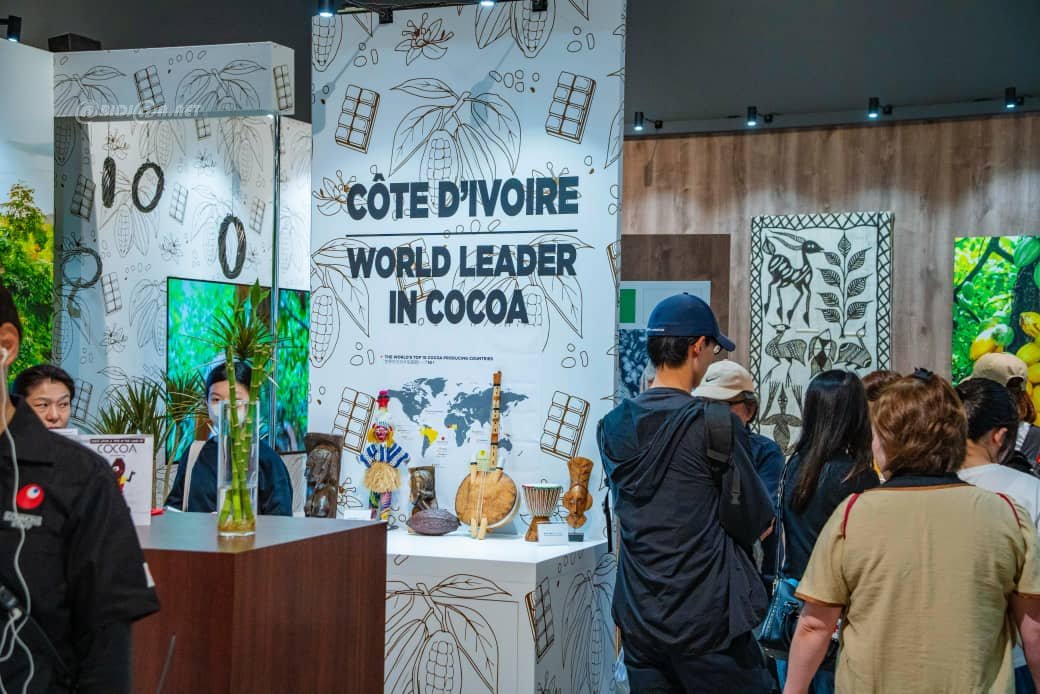
The Osaka 2025 World Expo represents a significant milestone in Côte d’Ivoire’s international strategy. At a time when world fairs serve as platforms for nations to express their identities, the West African country has framed its participation around the promotion of heritage and cultural diplomacy. This initiative forms part of a broader dynamic epitomised by 2024, a year marked by a series of events designed to strengthen Ivorian soft power and enhance the country’s visibility on the global stage.
In Côte d’Ivoire, 2024 was most notably defined by the hosting of the Africa Cup of Nations, a major organisational and logistical challenge which has since substantially boosted the country’s appeal. Stadiums, hotels, airports, transport infrastructure and tourist sites gave millions of visitors the chance to experience first-hand the scale of Côte d’Ivoire’s accelerated modernisation. The tournament acted as a showcase, revealing recent investments and positioning the country as a new flagship destination on the continent, not only in sport but also in economics and culture.
In November of the same year, Côte d’Ivoire welcomed contestants from the Miss France pageant during a promotional visit, under the slogan “Land of Hospitality”. The recognition of attiéké as part of UNESCO’s Intangible Cultural Heritage list further contributed to this momentum.
These initiatives align with the government programme “Sublime Côte d’Ivoire”, endowed with a budget of over 3,000 billion CFA francs, aimed at propelling the country into the top five African destinations.
An international cultural showcase
In Osaka, Côte d’Ivoire staged its participation in grand fashion around its national pavilion, coordinated by Côte d’Ivoire Export. Headed by Commissioner-General Mr Fadiga Kaladji, the agency is responsible for promoting and developing Ivorian exports of goods and services. Within the framework of the Expo, it oversaw cultural and commercial activities as well as diplomatic exchanges.
“This Expo, under the theme ‘Designing Future Society for Our Lives’, is a unique platform, a global stage where nations share their vision, expertise, and aspirations for a better, more united and more sustainable world,” said Mr Fadiga Kaladji.
The “Ivorian Week”, held from 9 to 15 June, offered opportunities for several bilateral economic meetings, particularly between the Minister of Trade and Industry, Dr Souleymane Diarrassouba, and his Japanese counterparts. The country’s cultural heritage was also brought to the fore, with highlights including performances by the National Ballet of Côte d’Ivoire and a series of concerts culminating in a show by composer and singer Alpha Blondy.
Cuisine played a central role in promoting the made in Côte d’Ivoire brand, with presentations of traditional dishes such as kabato with okra, choukouya, and attiéké, recognised by UNESCO in 2024. Locally processed products were also showcased, including chocolate creations by chef Viviane Kouamé, reinforcing the value of local production. Côte d’Ivoire also sought to raise awareness among visitors and international investors about the importance of its cocoa industry, which today accounts for 45% of global production.
An economic forum complemented the pavilion’s activities, positioning Côte d’Ivoire as a gateway to the West African market. Key topics included foreign direct investment, sustainable technologies, urban infrastructure and innovation. The aim was to move beyond traditional agricultural exports and foster a more diversified economy.
A long-term strategy driven by cultural diplomacy
Unlike many African nations that focus their strategy solely on economic policy, Côte d’Ivoire recognises the power of cultural and heritage-based soft power for its development.
Participation in the Osaka Expo forms part of the National Development Plan, one of whose pillars seeks to reduce dependence on the primary sector (coffee, cocoa, rubber) by diversifying growth drivers. Tourism, promoted through presentations of the Sublime Côte d’Ivoire strategy to Japanese investors and officials, has been positioned as a strategic link in this diversification effort. “This strategy aims to make tourism a lever for growth, job creation and international influence,” explained Mr Fadiga Kaladji.
The authorities also envision a role for cultural and creative industries. The notable growth of the audiovisual sector, driven by domestic demand and a flourishing local output, illustrates its potential to generate both jobs and economic activity. In Osaka, Ivorian video game company Paradise Game partnered with leading Japanese firm Happy Life Design Lab to develop innovative digital and cultural content.

